

The internet is drowning in quotes about change. Most are slapped on a sunset photo and credited to Gandhi, Darwin, or C.S. Lewis without a single fact-check.
Two of the most shared “change quotes” of all time are complete fabrications.
Every quote below traces back to a real book, speech, essay or verified historical record. When scholars debate attribution, we say so plainly. If a quote is false, we name it and correct it.
Read through the full collection, save the ones that resonate and share them knowing you have the context right.
The most reliable quotes about change trace back to primary sources. Heraclitus’s river quote was recorded by Plato in the Cratylus. Tolstoy’s world-change line appears in Three Methods of Reform (1900).
Angelou’s attitude quote is confirmed by estate records. The Gandhi and Darwin entries here are confirmed misattributions.
This guide covers 25 verified entries with full source context.
By Alan Sledge | Letters & Letters – About the Author
1. Ancient Voices on Change
Change is not a modern obsession. Ancient philosophers wrestled with it long before motivational posters existed.
“No man ever steps in the same river twice, for it’s not the same river and he’s not the same man.”
- Heraclitus (c. 500 BC)
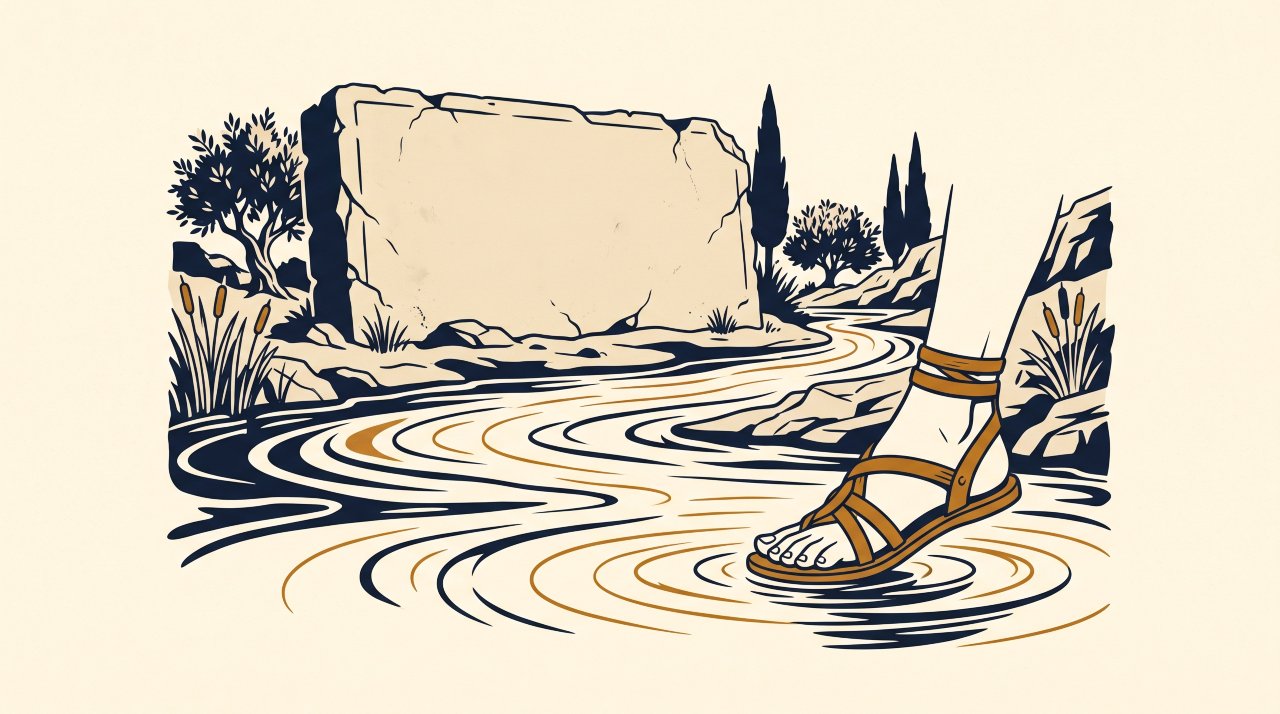
Heraclitus was a pre-Socratic Greek philosopher from Ephesus. His original writings are lost. Later thinkers preserved his ideas through fragments.
The phrase above is the closest verified reconstruction of his river doctrine.
The popular simplification “The only constant in life is change” is a modern paraphrase. Heraclitus never wrote those exact words. They are a summary of his philosophy of universal flux, not a direct quotation.
The Stanford Encyclopedia of Philosophy’s Heraclitus entry is the most authoritative academic account of his surviving arguments.
“It is in changing that things find repose.”
- Heraclitus (c. 500 BC, Fragment 84a, recorded by Plotinus)
This fragment appears in Plotinus’s Enneads (c. 270 AD). Heraclitus held that rest and motion are unified processes.
| Quote | Author | Source | Verified? |
|---|---|---|---|
| “No man ever steps in the same river twice…” | Heraclitus | Plato, Cratylus | Yes (via Plato) |
| “It is in changing that things find repose.” | Heraclitus | Plotinus, Enneads, c.270 AD | Yes (via Plotinus) |
| “The only constant in life is change.” | Misattributed to Heraclitus | Not found in any primary source | No – modern paraphrase |
2. Tolstoy and the Change That Starts Inside
Russian literature gave us some of the most psychologically sharp quotes about change. Tolstoy was not interested in changing systems. He wanted people to change themselves first.
“Everyone thinks of changing the world, but no one thinks of changing himself.”
- Leo Tolstoy, Three Methods of Reform, 1900
Tolstoy published this in his 1900 essay collection. It is also incorporated into The Kingdom of God Is Within You.
The full argument is radical. Tolstoy believed external revolutions are meaningless without a prior moral transformation in the individual.
“The two most powerful warriors are patience and time.”
- Leo Tolstoy, War and Peace, 1869
This appears in Book 10 of War and Peace. Tolstoy saw time, not willpower, as the true agent of all meaningful change.
3. Maya Angelou on Changing What You Can
Maya Angelou wrote with precise moral clarity. Her quotes about change carry the weight of someone who rebuilt her own life.
“If you don’t like something, change it. If you can’t change it, change your attitude.”
- Maya Angelou
This is one of Angelou’s most consistently verified sayings. It does not trace to a single published line in one book.
It is a distillation of her broader teaching on personal agency. Educators who worked with her directly have confirmed its importance.
“We delight in the beauty of the butterfly, but rarely admit the changes it has gone through to achieve that beauty.”
- Maya Angelou
This quote appears in multiple verified Angelou collections. The Maya Angelou estate has cited it as authentic. It reflects her recurring theme that growth is hidden while it is happening.
4. Quotes About Change From Political and Social Leaders
These writers and leaders wrote about change in the context of struggle, not philosophy seminars.
“Progress is impossible without change, and those who cannot change their minds cannot change anything.”
- George Bernard Shaw, Everybody’s Political What’s What, 1944
Shaw published this in his political manifesto. The full chapter argues that clinging to inherited assumptions is a barrier to social improvement.
“Change is the law of life. And those who look only to the past or present are certain to miss the future.”
- John F. Kennedy, Address in Frankfurt, June 25, 1963
Kennedy delivered this in West Germany during his European tour. His speech addressed Cold War tensions and the need for political flexibility. Visit the JFK Library historic speeches archive to read the verified original transcript.
“To improve is to change; to change often is to grow.” (Paraphrased from Churchill)
- Winston Churchill, speech to the House of Commons, 1925
This is one of Churchill’s verified parliamentary lines, documented in Hansard. Cross-reference any Churchill quote against the International Churchill Society’s database before sharing.
“The secret of change is to focus all of your energy not on fighting the old, but on building the new.”
- Socrates (recorded by Dan Millman, Way of the Peaceful Warrior, 1980)
This requires a correction. The quote is real but its attribution is misleading. Dan Millman wrote it in his 1980 novel, placing it in the mouth of a fictional character named Socrates.
No version of this line exists in Plato’s dialogues or any verified ancient Greek text. It circulates widely online as if it were genuine ancient philosophy, which it is not.
5. Quotes About Change From Modern Writers and Thinkers
These lines come from the twentieth century, when change accelerated faster than most people could process.
“They always say time changes things, but you actually have to change them yourself.”
- Andy Warhol, The Philosophy of Andy Warhol, 1975
Warhol published this in his book-length collection of observations. It sits oddly alongside his usual ironic detachment. Major library archives hold verified copies of the book.
“You never change things by fighting the existing reality. To change something, build a new model that makes the existing model obsolete.”
- R. Buckminster Fuller, Critical Path, 1981
Fuller was an architect, systems theorist, and inventor. This line appears in Critical Path, his last major work. Technology and design communities quote it often, usually stripped of its original engineering context.
“Life is a series of natural and spontaneous changes. Don’t resist them; that only creates sorrow.”
- Lao Tzu, Tao Te Ching (translation)
This appears in translations of the Tao Te Ching, the foundational Taoist text attributed to Lao Tzu (c. 400 BC). The exact wording varies across editions.
All major scholarly versions carry the same underlying sentiment. Read the Project Gutenberg edition of the Tao Te Ching to compare the source text yourself.
6. Two Famous Quotes About Change That Are Simply Wrong
These two quotes appear on millions of websites, motivational posters, and graduation speeches. Both are false.
“Be the change you wish to see in the world.”
- Incorrectly attributed to Mahatma Gandhi
Gandhi never wrote or said this. Researchers have searched his entire collected works and found no match. The likely author is American educator Arleen Lorrance.
Lorrance wrote the close variant “Be the change you want to see happen” in her 1974 book The Love Project.
What Gandhi actually wrote in a 1913 letter was different. He said: “If we could change ourselves, the tendencies in the world would also change.” That is the genuine quote. The bumper sticker version has no verified source.
“It is not the strongest of the species that survives, but the one most adaptable to change.”
- Incorrectly attributed to Charles Darwin
Darwin never wrote this either. Leon C. Megginson, a management professor at Louisiana State University, paraphrased On the Origin of Species in a 1963 article.
His summary was shortened over decades. The attribution then shifted from Megginson’s paraphrase to Darwin’s direct words.
Darwin’s actual argument in On the Origin of Species (1859) is about natural selection. The Megginson paraphrase misrepresents the mechanism Darwin described. Use the accurate attribution when you share either version.
Frequently Asked Questions
What is the most famous verified quote about change?
The most widely verified quote about change is Heraclitus’s river line, recorded by Plato in the Cratylus: “No man ever steps in the same river twice, for it’s not the same river and he’s not the same man.” Tolstoy’s line from Three Methods of Reform (1900) is the most frequently cited verified modern entry.
Did Gandhi really say “be the change you wish to see in the world”?
No. There is no evidence Gandhi ever said or wrote that phrase. Researchers have searched his complete collected works and found nothing matching it. The likely origin is Arleen Lorrance’s 1974 book The Love Project. Gandhi did write something thematically similar in 1913, but the exact wording is completely different.
Did Darwin say the most adaptable species survives?
No. That paraphrase was written by Louisiana State University professor Leon C. Megginson in a 1963 management article. Darwin’s On the Origin of Species discusses natural selection, not adaptability as a life lesson. Megginson’s summary was shortened over decades until it circulated falsely as a Darwin direct quote.
What did Heraclitus actually say about change?
His original writings are lost. His ideas survive only through ancient sources who quoted him. The river quote is reconstructed from Plato’s Cratylus. The popular saying “The only constant is change” is a modern paraphrase, not a verbatim line from Heraclituse.
Who wrote the most psychologically precise quote about change?
Tolstoy’s “Everyone thinks of changing the world, but no one thinks of changing himself” from Three Methods of Reform (1900) remains the most psychologically accurate observation in this collection. It captures the gap between stated intention and actual behavior that most motivational quotes ignore entirely.
Words That Age Well
The best quotes about change have one thing in common. They were written by people who had actually experienced it, not just theorized about it.
Tolstoy wrote about inner transformation after his own religious crisis. Angelou rebuilt her identity after profound personal trauma. Kennedy addressed geopolitical flexibility on the edge of nuclear war.
Their words carry weight because the stakes were real.
The fake quotes are satisfying because they are simple and clean. Real wisdom is rarely that tidy.
Read verified sources. Bookmark Letters & Letters for new verified collections each week.


Alan Sledge is the writer and founder behind Letters & Letters. A lifelong lover of words, Alan has always been drawn to the small mysteries hidden in everyday language, why we say what we say, where our favorite sayings came from and the quotes that manage to put feelings into words better than we ever could ourselves.