
Office workers type the phrase into digital chat channels to acknowledge receipt of project files. Teenagers utter the expression with cheerful irony when friends announce spontaneous weekend plans. Sitcom enthusiasts recall the two words instantly as a trademark slogan from classic family television.
Across contemporary American English, cool beans serves as a lighthearted exclamation of enthusiastic agreement and casual approval. The idiom feels comfortably familiar and playfully absurd. Few speakers ever stop to consider why edible legumes became synonymous with social satisfaction.
The true origin of the phrase cool beans reveals an intriguing evolution across modern American vernacular history. Born in late 1960s counterculture circles, the expression traveled through California comedy routines before reaching primetime television. Centuries of older slang prepared the linguistic soil for its sudden rise.
Quick Answer: Origin of the Phrase Cool Beans
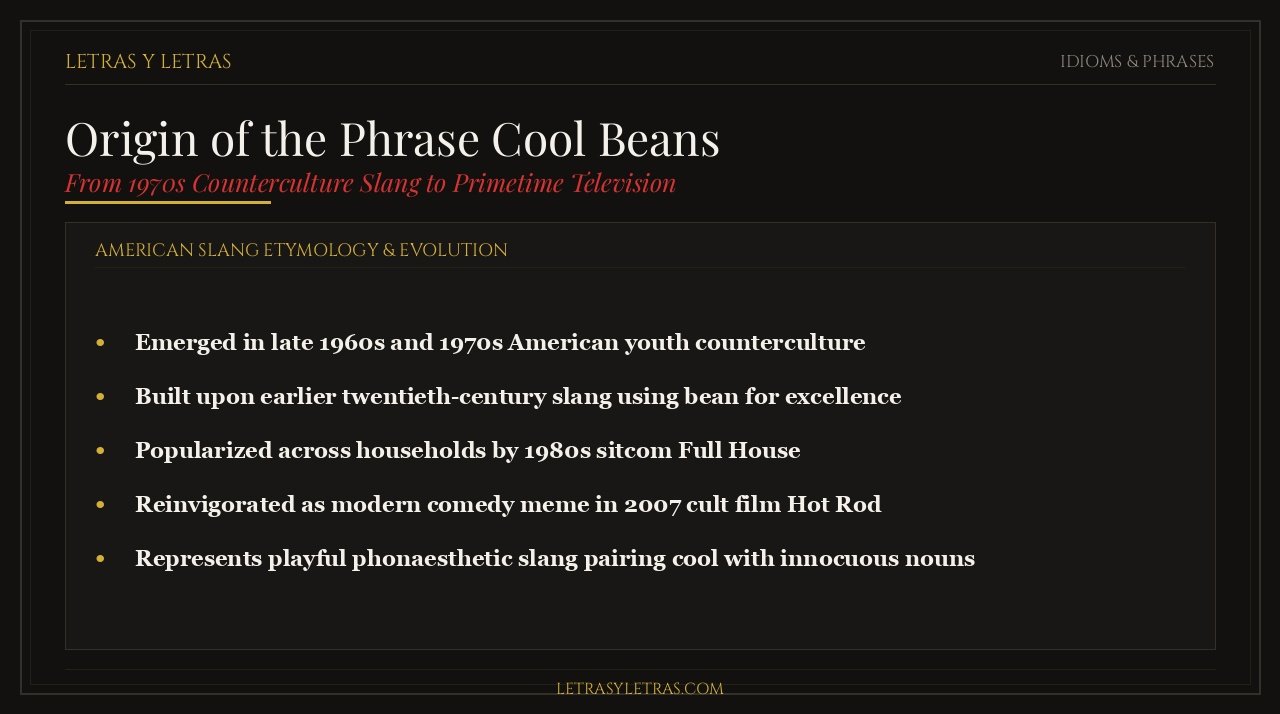
The phrase cool beans originated as American youth counterculture slang in the late 1960s and early 1970s. Linguists trace its roots to earlier English slang traditions that used bean to signify excellence, money, or the human head. Counterculture youth paired the popular approval term cool with the bouncy noun beans for playful rhythmic cadence. The phrase gained national momentum through 1970s stoner comedy records and college campus publications. During the late 1980s, the hit television sitcom Full House introduced cool beans to millions of family households. Later, the 2007 cult comedy film Hot Rod transformed the expression into an enduring digital internet meme.
Key Takeaways
- Cool beans emerged in American counterculture circles during the late 1960s and 1970s.
- Builds upon older slang traditions like full of beans and that is the bean.
- Combines the standard approval adjective cool with playful phonaesthetic rhythm.
- The 1980s sitcom Full House transformed the phrase into a mainstream suburban staple.
- Revived in modern digital comedy through the 2007 cult film Hot Rod.
The Anatomy of a Slang Classic: Meaning, Tone, and Function
Slang terms emerge and disappear with remarkable velocity across spoken English. Most faddish catchphrases enjoy brief popularity among teenagers before slipping into complete obscurity. Only a handful of expressions survive across multiple successive generations.
The phrase cool beans belongs to that rare category of enduring colloquialisms. Linguistically, the expression functions primarily as an informal interjection of positive acknowledgment. A speaker uses it to express enthusiastic agreement, contentment, or casual approval.
The Merriam-Webster cool beans dictionary entry classifies the phrase as an exclamation of delight. It carries a distinctly cheerful, non-threatening emotional posture. The expression lacks the cynical edge found in more aggressive street idioms.
The expression also provides useful social flexibility in everyday conversation. It allows speakers to accept plans without delivering formal speeches. A simple two-word reply communicates total compliance with friendly warmth.
Beyond its utilitarian function, the phrase possesses unmistakable phonetic charm. The pairing of hard consonants and round vowels creates a bouncy, satisfying cadence. Language users instinctively gravitate toward phrases that feel enjoyable to pronounce aloud.
This playful phonology helped protect the idiom from sounding dated. Even when used with slight irony, the phrase retains disarming innocence. Its unique warmth sets it apart from conventional expressions of agreement.
The Culinary Lexicon: How Bean Conquered English Slang
To uncover where cool beans came from, we must examine the historical slang career of the word bean itself. For hundreds of years, English speakers have utilized common agricultural legumes in vernacular idioms. The modest vegetable generated dozens of colorful colloquial expressions.
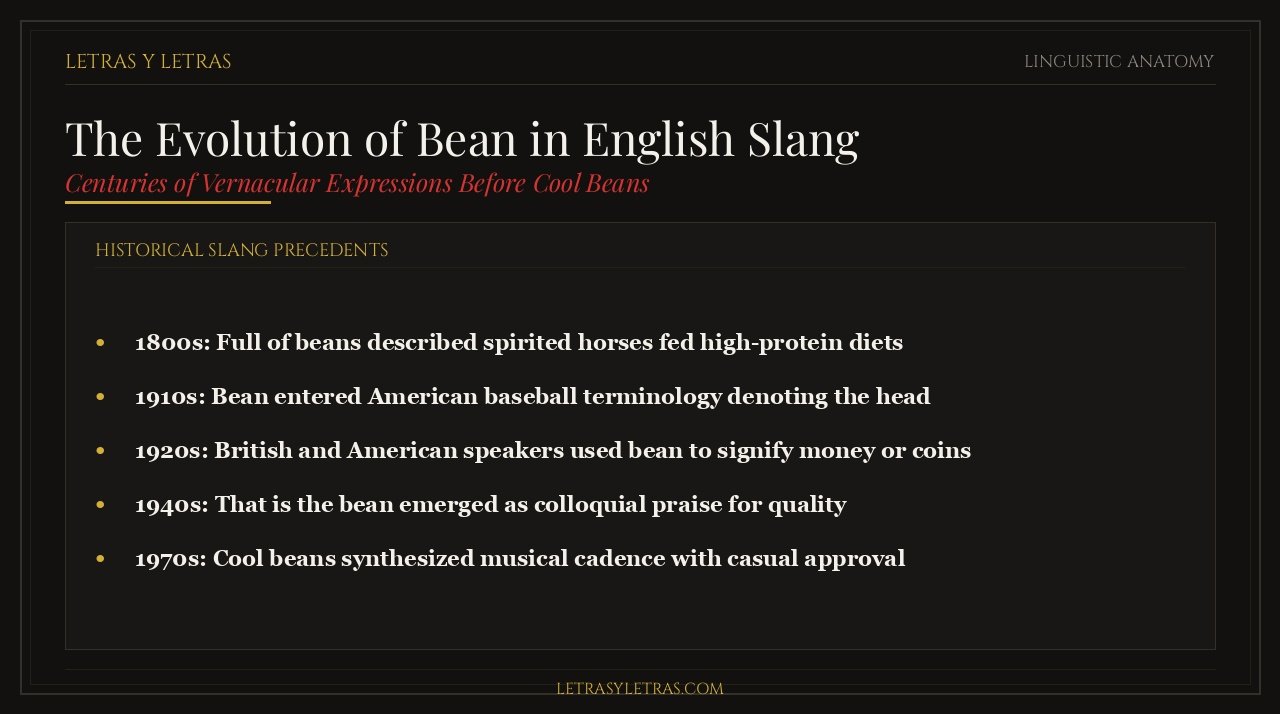
In nineteenth-century British equestrian circles, stable masters fed high-protein field beans to working horses. Horses nourished on rich bean diets displayed extraordinary energy, high spirits, and vigorous galloping speed. By 1820, British horsemen described spirited steeds as full of beans.
The idiom quickly crossed into human conversation to describe energetic, lively, or talkative individuals. In the United States, speakers adopted the phrase while creating their own regional legume vocabulary. By the late nineteenth century, bean had entered urban American criminal argot to represent money, silver coins, or gambling counters.
A penniless person was described as not having a bean. Early twentieth-century American sports culture expanded the metaphor further into physical anatomy. Baseball players began using bean to refer to the human head, coining beanball for pitches aimed at batters helmets.
Historical records in the Online Etymology Dictionary bean entry demonstrate this rich metaphorical breadth. During the 1920s and 1930s, American youth began using bean to describe excellence or distinction. Phrases like that is the bean signified something first-rate, clever, or commendable.
By the midpoint of the twentieth century, the word bean possessed a long resume of slang associations. It represented energy, mental agility, financial value, and superior quality. The noun stood fully prepared to combine with the coolest adjective in the language.
The Counterculture Crucible: Hippies, Van Culture, and College Campuses
The exact combination cool beans coalesced during the dramatic cultural upheaval of the late 1960s. Across California beach towns, music festivals, and university campuses, American youth rejected traditional linguistic conventions. Young speakers pioneered an inventive lexicon emphasizing relaxed pleasure, musical groove, and anti-authoritarian camaraderie.
The adjective cool had already served as the cornerstone of jazz and beatnik culture since the 1940s. By 1970, however, cool was so widely used that younger speakers sought novel ways to refresh the term. Hippie circles began appending playful, nonsensical, or sensory nouns to create fresh variations.
Students paired cool with objects like cats, breezes, and food items. Within custom van clubs, surf shacks, and communal households, cool beans emerged as an affectionate rhyming colloquialism. The alliteration and lighthearted absurdity reflected the carefree ethos of the era.
The Green Dictionary of Slang cool beans records date earliest written citations to the early 1970s. Campus publications and underground zines in California and Massachusetts began printing the exclamation. Students used it in personal letters and campus humor columns to register enthusiastic agreement.
The phrase spread rapidly through word of mouth across Interstate highway systems. Traveling musicians and counterculture hitchhikers carried California vernacular into Midwestern and East Coast college towns. By 1975, cool beans was firmly established as authentic youth argot.
The expression remained underground for its initial decade. Parents and mainstream corporate broadcasters did not yet understand the phrase. It served as a private handshake among members of a distinct cultural generation.
Hollywood and Counterculture Comedy: The Cheech and Chong Era
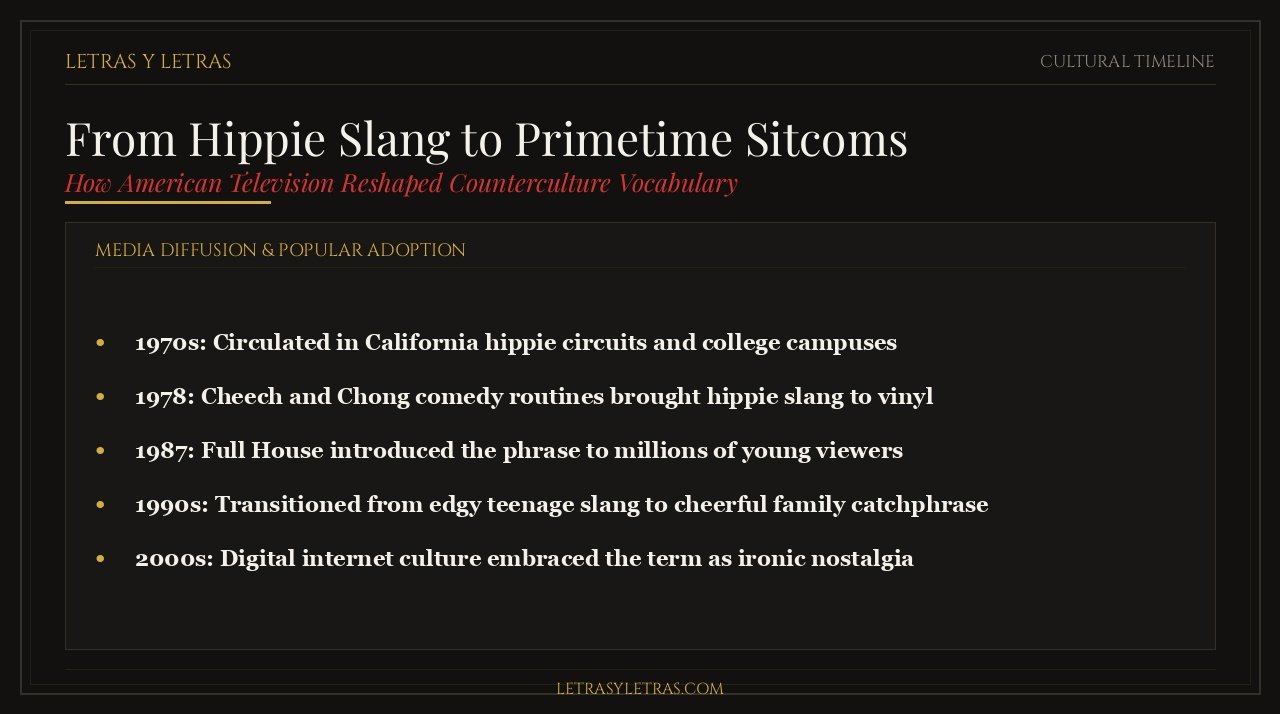
Slang requires mass cultural conduits to transition from regional subcultures into national consciousness. During the late 1970s, counterculture comedy acts provided that essential bridge. Comedy duo Richard Cheech Marin and Tommy Chong introduced American audiences to the eccentric language of California youth.
Cheech and Chong comedy records sold millions of copies to teenagers and young adults across North America. Their breakthrough 1978 comedy film Up in Smoke grossed tens of millions of dollars at the box office. These routines captured the laid-back vocal cadences, pauses, and catchphrases of West Coast hippie life.
Popular folklore frequently credits Cheech and Chong with inventing cool beans from whole cloth. While their recorded sketches helped popularize drug-adjacent slang, historical evidence demonstrates the idiom predated their films. The comedians acted as national amplifiers rather than original coiners.
Hearing counterculture slang in movie theaters normalized unusual colloquialisms for mainstream suburban adolescents. High school hallways echoed with impressions of California stoner voices. Phrases like far out, groovy, and cool beans gained widespread acceptance across diverse demographic groups.
Commercial advertisers began noticing the commercial power of youth vernacular. Radio stations and clothing brands adopted counterculture speech to appeal to teenage consumers. The ground was prepared for a massive prime-time television breakthrough.
By the end of the 1970s, cool beans had completed the initial phase of its cultural rise. It had moved from underground communal gatherings into popular comedy recordings. Its next transformation would occur inside suburban living rooms.
The Sitcom Megaphone: Full House and the 1980s Resurgence
If the 1970s created cool beans, the 1980s transformed it into a household institution. In September 1987, the ABC television network launched an unassuming family sitcom titled Full House. The show centered on a widowed father raising three daughters in San Francisco with help from relatives.
The program quickly became a cornerstone of the legendary ABC Friday night television block known as TGIF. Millions of American children, teenagers, and parents gathered in front of televisions each week. The sitcom became a defining cultural touchstone for Generation X and older Millennials.
The writers of Full House sought realistic contemporary dialogue for eldest daughter D J Tanner, played by Candace Cameron. They incorporated cool beans into her character vernacular. Characters like Steve Hale and Stephanie Tanner also delivered the line across multiple memorable episodes.
Television exposure stripped away any lingering counterculture or rebellious connotations. In the wholesome Tanner household, cool beans became completely clean, cheerful, and family-friendly. Elementary school students across America adopted the phrase without knowing its 1970s hippie roots.
Syndication broadcast Full House daily into millions of homes throughout the 1990s. International broadcasts exported the Tanner family catchphrases to audiences in Canada, the United Kingdom, and Australia. A phrase born on California beaches was now recognized around the globe.
This television era represents the peak of mainstream cultural saturation for cool beans. The expression had evolved from counterculture rebellion into suburban domestic normalcy. It was safe for children, parents, and schoolteachers alike.
From Nostalgia to Irony: Hot Rod and Digital Meme Culture
As the twentieth century closed, cool beans began shedding its wholesome 1980s television earnestness. Language evolves rapidly, and subsequent teenage cohorts viewed the phrase as delightfully dated. By the early 2000s, the expression entered an ironic second life.
Young adults who grew up watching TGIF sitcoms began deploying cool beans with self-aware comedic flair. The idiom became a nostalgic wink to 1980s childhoods. Then, a 2007 comedy motion picture propelled the phrase into digital absurdity.
In the cult comedy film Hot Rod, comedian Andy Samberg plays an amateur stuntman named Rod Kimble. In one famously bizarre sequence, Samberg and co-star Jorma Taccone engage in a repetitive verbal exchange. The characters repeat the words cool beans back and forth with escalating dramatic intensity.
The surreal scene became a viral sensation across early video-sharing websites and digital internet forums. Millions of viewers shared audio clips, video snippets, and animated images of the dialogue. A new generation of internet users embraced the phrase as pure comedic gold.
Digital chat rooms, social media platforms, and workplace messaging apps adopted cool beans as an ironic reaction sticker. The phrase had traveled full circle from earnest hippie slang to sitcom staple to ironic meme. Its rhythmic adaptability ensured its survival in the digital era.
Today, speakers deploy cool beans across multiple communicative layers. One can use it completely earnestly to say thank you to a colleague. Speakers can also use it with playful irony among close friends to celebrate good fortune.
Chronological Milestones in the History of Cool Beans
The historical timeline below summarizes the major linguistic, television, and cinematic milestones of the phrase cool beans:
| Time Period | Cultural Arena | Key Milestone | Linguistic Impact |
|---|---|---|---|
| 1820 to 1890 | British and American Slang | Full of beans emerges from high-protein horse feed diets. | Establishes bean as an informal idiom for energy and vitality. |
| 1910 to 1940 | American Sports and Argot | Bean used for head in baseball; that is the bean means quality. | Expands the culinary term into colloquial praise of excellence. |
| 1968 to 1975 | California Counterculture | Youth pair cool with beans in beach communities and campuses. | Coinage of the exact phrase cool beans as approval slang. |
| 1978 | Cheech and Chong Films | Counterculture comedy movies showcase West Coast youth vocabulary. | Propels California hippie idioms into national suburban awareness. |
| 1987 to 1995 | ABC Sitcom Full House | D J Tanner uses cool beans across prime-time family broadcasts. | Transforms counterculture slang into universal household catchphrase. |
| 2007 to Present | Hot Rod and Digital Memes | Andy Samberg comedy scene goes viral on internet social video platforms. | Reinvents cool beans as self-aware ironic digital pop culture meme. |
Debunking Common Myths About the Origin of Cool Beans
Because cool beans possesses an eccentric, whimsical sound, amateur etymologists have invented numerous creative explanations. Examining linguistic and historical documentation dispels three prevalent myths:
The primary myth claims television writers for Full House invented cool beans in 1987. Millions of viewers associate Candace Cameron character with the line. Written records from college newspapers prove the phrase existed twenty years earlier.
Television producers did not invent the expression. They simply borrowed authentic West Coast teenage slang to make young characters sound relatable. The show popularized an existing term rather than coining it.
A second myth asserts that cool beans originated in nineteenth-century coffee roasting shops. Storytellers claim roasters checked beans after cooling them on wooden trays. No historical culinary manual contains this phrase as a commercial expression.
A third myth links the phrase to Mexican jumping beans sold as novelty toys in mid-century American five-and-dime stores. Folklorists claim children remarked on how cool the jumping beans were. Linguistic corpora provide zero textual evidence supporting this novelty toy hypothesis.
We encounter similar folk etymologies in our origin of the word sinister guide. When people lack documented linguistic facts, they readily invent plausible stories.
The Phonaesthetics of Slang: Why Arbitrary Words Catch Fire
Why did beans conquer popular speech instead of peas, carrots, or radishes? Language scientists use the term phonaesthetics to describe how the pleasing sound of words influences their adoption. Human beings naturally enjoy rhythmic, bouncy syllables.
The monosyllabic word cool features a smooth, elongated vowel sound. Pairing it with the plosive consonant B and buzzing sibilant of beans creates an irresistible phonetic contrast. The combination rolls smoothly off the tongue.
Slang also thrives on mild absurdity. Calling an excellent idea cool beans introduces disarming humor into everyday interactions. It diffuses tension, establishes friendly rapport, and signals playful humility.
We see comparable human psychology at play across classical history. Consider our exploration of the meaning of the name Agamemnon. Names and words reflect the deepest emotional desires of the societies that coin them.
Vulnerability also shapes how societies preserve metaphorical idioms. We investigated fatal human flaws in our study of the origin of the phrase Achilles heel. Metaphors persist because they capture timeless truths.
Purity of intent matters equally in casual speech and formal vows. Review authentic historical standards in our origin of the word sincere investigation. Genuine speech builds lasting human trust.
Community solidarity also creates durable vocabulary. Discover how collective ostracism coined an international verb in our origin of the word boycott history. Language records how communities organize against injustice.
Everyday terms often disguise ancient games of chance. Explore medieval gambling origins in our origin of the word hazard study. Random recreational pursuits often evolve into universal words.
Tranquil natural environments also inspire enduring expressions. Examine sacred walled sanctuaries in our origin of the word paradise reflection. The human imagination constantly seeks harmony through language.
Disciplined character balances playful humor in daily living. Explore time-tested maxims in our curated collection of quotes on discipline. Governing speech and conduct ensures enduring personal integrity.
Frequently Asked Questions
What is the literal meaning of the phrase cool beans?
Cool beans is an informal American idiom meaning great, wonderful, or sounds good. It expresses enthusiastic agreement, positive acknowledgment, and casual satisfaction.
When was the phrase cool beans first used?
Linguists trace cool beans to late 1960s and early 1970s American youth counterculture. Earliest print citations appear in California and Massachusetts college campus publications during the early 1970s.
Did Full House invent the phrase cool beans?
No, the sitcom Full House did not invent cool beans. Writers added existing teenage slang into D J Tanner dialogue, popularizing it for millions of household viewers.
Did Cheech and Chong coin cool beans?
No, Cheech and Chong did not invent the phrase. The comedy duo helped popularize California hippie speech through comedy records and their 1978 movie Up in Smoke.
What movie made cool beans popular again in 2007?
The 2007 comedy film Hot Rod, starring Andy Samberg and Jorma Taccone, revived cool beans. A bizarre scene featuring the characters repeating the phrase went viral on digital video platforms.
Is cool beans still used today?
Yes, cool beans remains widely recognized across North America. Speakers use it in workplace chats and casual text messages as a friendly, cheerful expression of agreement.
Alan Sledge is the lead writer at letrasyletras.com, uncovering historical wisdom and word origins.


Alan Sledge is the writer and founder behind Letters & Letters. A lifelong lover of words, Alan has always been drawn to the small mysteries hidden in everyday language, why we say what we say, where our favorite sayings came from and the quotes that manage to put feelings into words better than we ever could ourselves.