
By Alan Sledge | Letters & Letters – About the Author
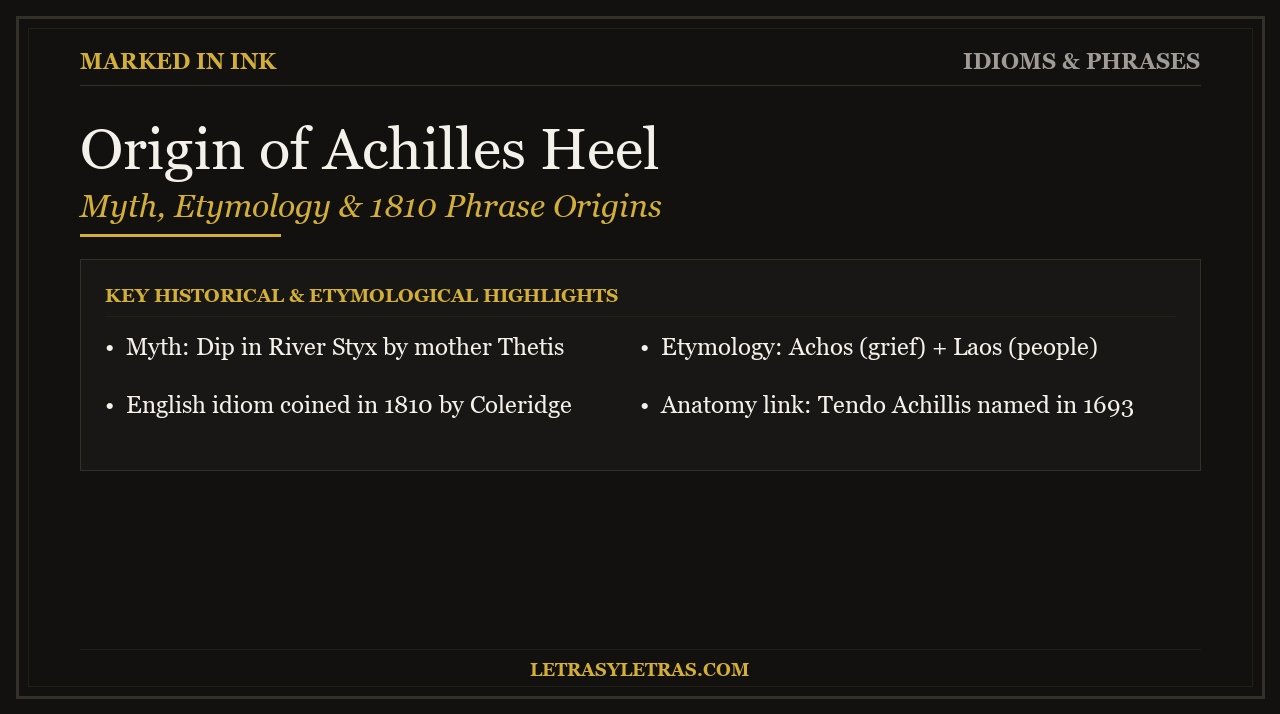
Mention an Achilles heel in conversation and everyone understands the meaning. It describes a hidden flaw that can ruin immense strength. Yet while the legend of Achilles is ancient, using his heel as an English idiom is surprisingly modern.
Exploring phrase origins reveals how classical legends transform into everyday language. In this case, ancient myth, anatomical discoveries, and nineteenth-century poetry joined together to create a famous idiom.
The Greek Myth Behind Achilles and the River Styx
In Greek mythology, Achilles was the central hero of Homer’s Iliad. He was the son of Peleus, King of the Myrmidons, and Thetis, a sea nymph.
Desperate to protect her mortal son from death in war, Thetis took Achilles to the River Styx in the Underworld.
Key Moments in the Mythic Legend
- The Styx Immersion: Thetis held baby Achilles by his heel and dipped him into the sacred river.
- The Vulnerable Spot: The heel held in her grip remained dry and unprotected by magic.
- The Trojan War: Achilles grew into an invincible warrior during the Siege of Troy.
- The Fatal Arrow: Paris shot a guided arrow into his heel, killing the hero.
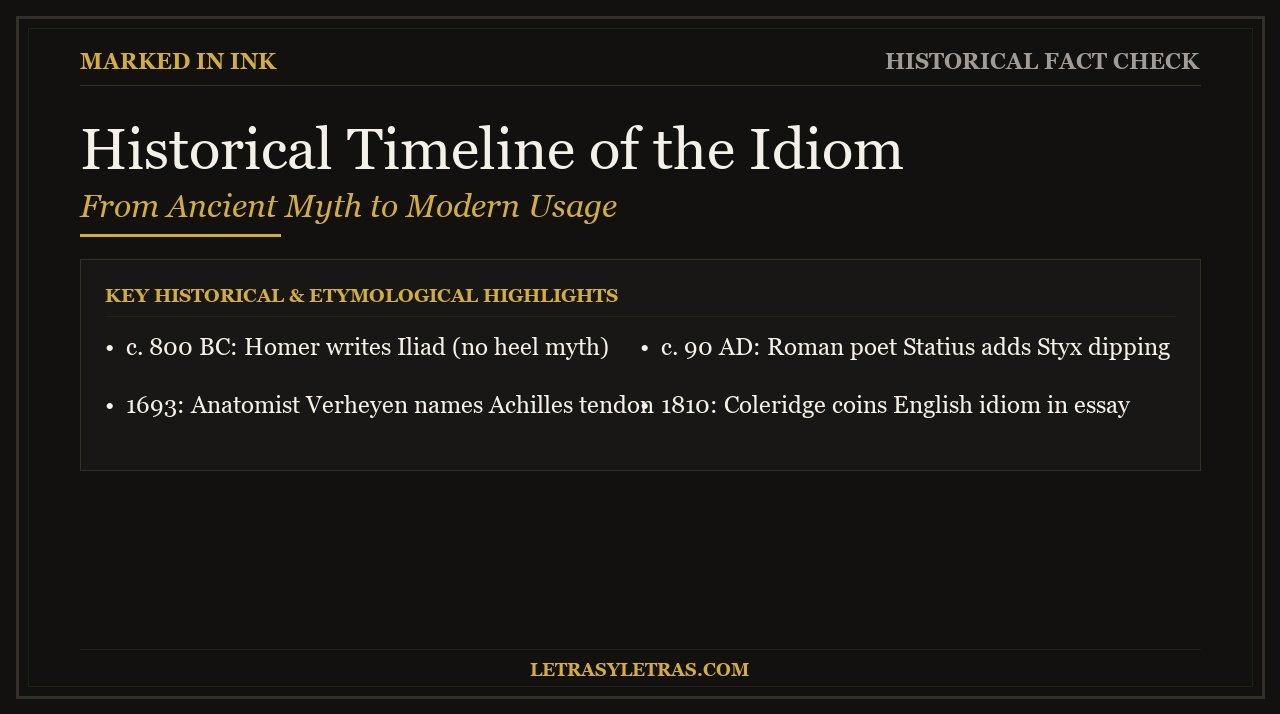
Historians at Encyclopaedia Britannica note that Homer never mentions the heel vulnerability in the Iliad. Roman poet Statius first recorded the Styx dipping story in his 1st-century epic Achilleid.
Ancient Greek Etymology of the Name Achilles
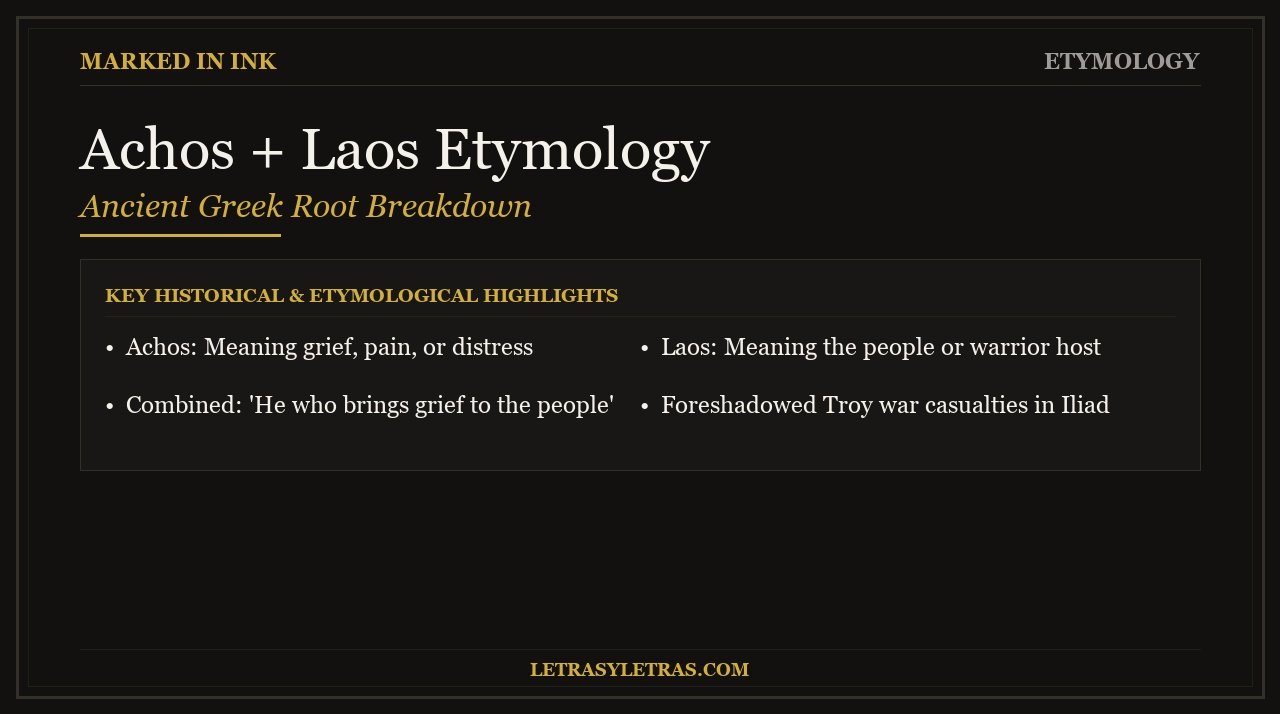
The name Achilles carries deep linguistic meaning in ancient Greek. Linguists analyze Achilleus (Ἀχιλλεύς) as a compound of two words:
- Achos (ἄchos): Meaning “grief,” “pain,” or “distress.”
- Laos (laos): Meaning “the people,” “nation,” or “warrior host.”
Combined, Achilleus means “grief of the people” or “he who brings pain to the host.”
The Online Etymology Dictionary confirms this root. This hero’s name foreshadowed the grief his anger brought to Achaeans and Trojans.
How Achilles Heel Became an English Idiom
While the myth existed for millennia, English speakers did not use “Achilles’ heel” as an idiom until 1810.
Romantic poet Samuel Taylor Coleridge first used the term metaphorically in a political essay regarding Ireland.
Historical Timeline of the Phrase
- 1693 (Anatomy): Dutch anatomist Philip Verheyen named the tendo Achillis (Achilles tendon) after his own tendon surgery.
- 1810 (Literature): Samuel Taylor Coleridge wrote of “Ireland, that vulnerable heel of the British Achilles.”
- 1840 (Common Usage): The phrase entered widespread English dictionaries as a figurative idiom for human weakness.
Read more about the phrase’s origins in our guide on the origin of the phrase caught red-handed.
Famous Quotes About Achilles and Vulnerability
Poets and playwrights have drawn inspiration from Achilles for centuries:
“Great grief comes to the Achaean host, yet glory crowns the fallen hero.”
: Homer, Iliad Book XXII
“No man is whole without a flaw to tether his pride to earth.”
: Samuel Taylor Coleridge (1810)
Explore our curated collection of famous quotes and quotations.
Frequently Asked Questions
What is the literal meaning of Achilles heel?
It means a single vulnerable spot or weakness in an otherwise strong entity.
Did Homer write about the Achilles heel?
No. Homer’s Iliad does not mention the heel myth. Roman poet Statius introduced the Styx dipping legend later.
Who coined the English phrase Achilles heel?
Samuel Taylor Coleridge first used it as an English idiom in an 1810 political essay.
Why is the tendon named after Achilles?
Anatomist Philip Verheyen named the tendon in 1693 to connect anatomical structure with classical lore.
Summary and Key Takeaways
The phrase Achilles heel combines ancient myth with modern English literature. Its origin shows how classical stories continue to shape how we describe human nature.
See more language histories in quotes about freedom and Editorial Policy and Etymology Standards.