
Have you ever heard the legend about angry factory workers throwing wooden shoes into machinery? This dramatic story is widely shared to explain the origin of the word sabotage. In reality, the true origin of the word sabotage is far more subtle and involves less property damage. The tale of flying footwear is a popular folk etymology, but historians tell a different story.
Quick Answer: Origin of the Word Sabotage
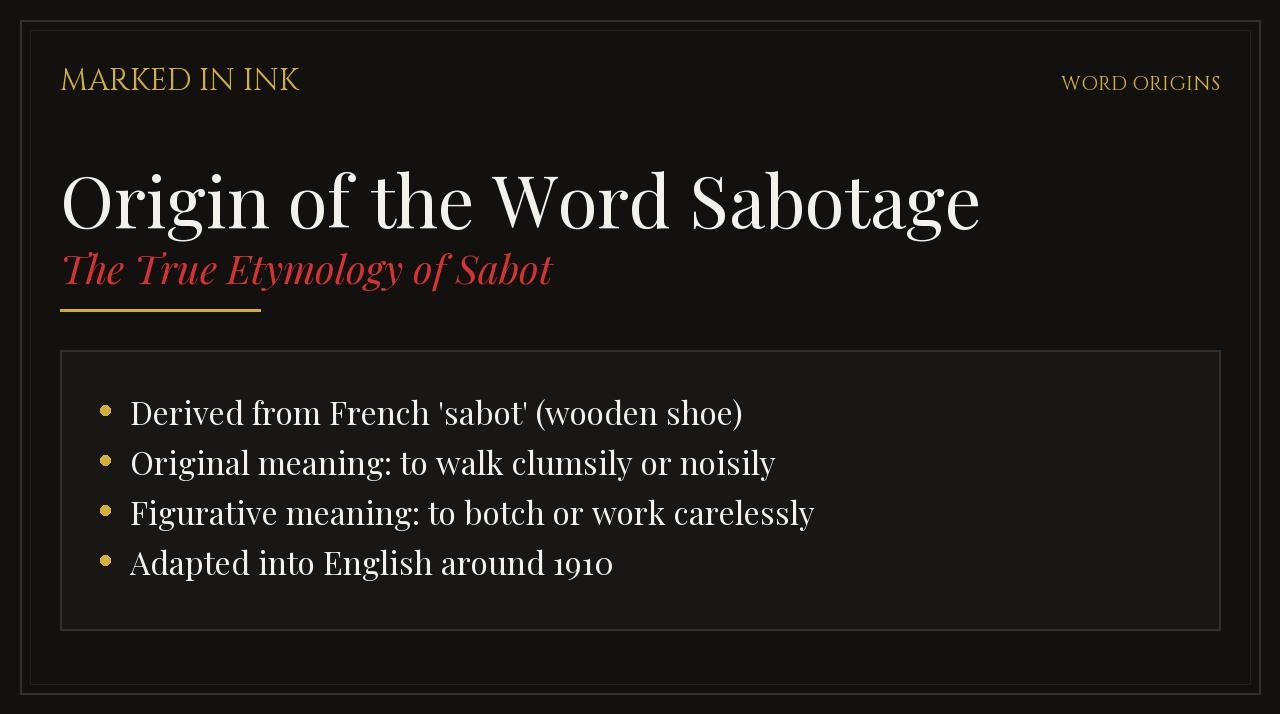
The word sabotage originates from the French noun sabot, meaning wooden shoe or clog. By the late 1800s, the verb saboter emerged, meaning to walk noisily or perform a task clumsily like someone wearing wooden shoes. The popular story that workers threw their shoes into machinery to halt production is a myth with no historical evidence. Instead, 19th-century French laborers protesting poor conditions would intentionally botch their work or slow down production, earning the description of “sabotaging” the effort. The term officially entered labor movements during an 1897 French railway strike.
Key Takeaways
- Sabotage comes from the French word sabot, which translates to a heavy wooden shoe.
- The verb saboter originally described walking clumsily or loudly in wooden clogs.
- The story of workers throwing shoes into factory gears is a well-known folk etymology.
- French railway workers in 1897 popularized the term during a strategic industrial slowdown.
- The word sabotage entered the English language around 1910 through labor movements.
During the late 19th century, French laborers sought ways to protest poor working conditions without a full strike. Their methods were clever and effective. They decided to work as if they were wearing clumsy, heavy wooden clogs.
This intentional slowdown became a powerful tool for the working class. Let us explore how a simple piece of footwear gave rise to this term. It remains one of our most recognizable words for deliberate disruption.
The Real Meaning of Sabot and Saboter
A Clunky Start
The word’s roots trace back to the French noun sabot, which means a wooden shoe. Peasants and lower-class workers across Europe commonly wore these shoes. Because they were carved from solid wood, they were heavy and restrictive. Walking in them produced a loud, clattering sound on cobblestone streets.
From Noun to Verb
By the 1800s, the French language adapted the noun into the verb *saboter*. Initially, this simply meant to walk noisily or clumsily. Over time, the definition shifted into a figurative sense.
To saboter a task meant to bungle it or perform the work carelessly. It described the actions of someone working like a clumsy person in clogs. If a worker did a poor job, people said they were “sabotaging” the effort.
You can explore the origin of the phrase caught red handed. Or read the origin of the phrase bite the bullet.
The 1897 Railway Strike and the Labor Movement
A New Tactic for Workers
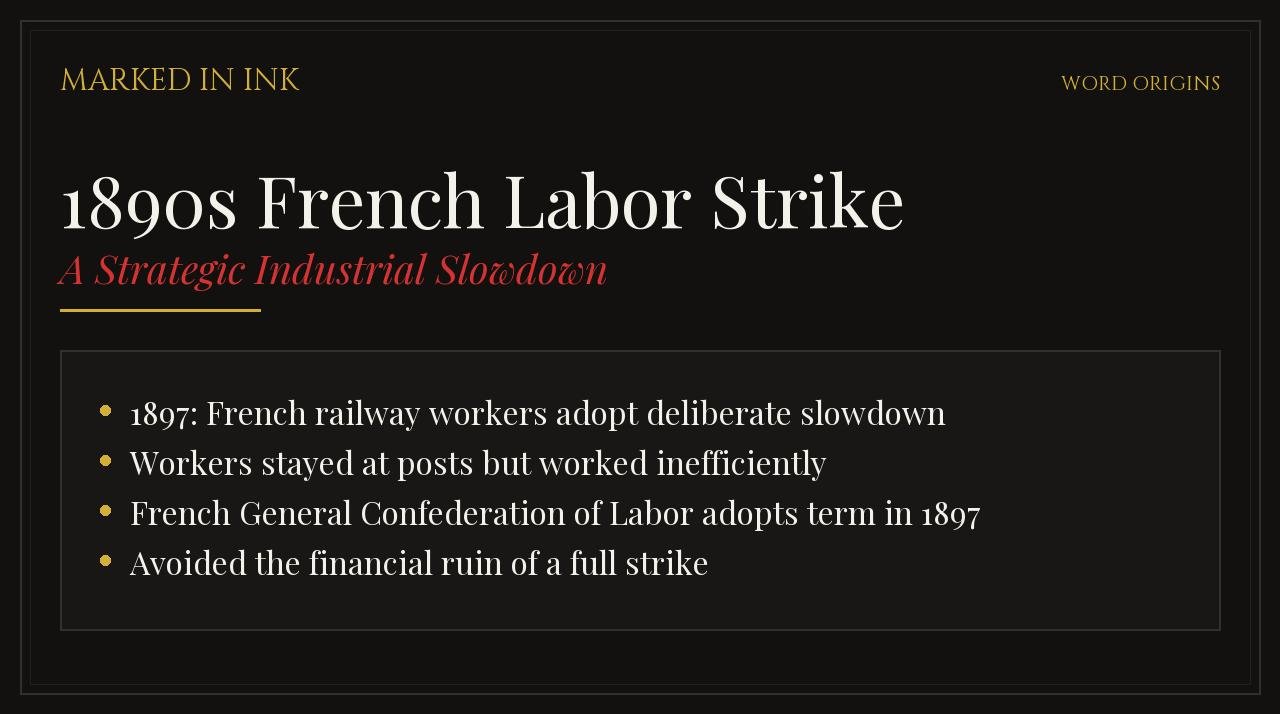
The modern political usage of the term emerged in France during the late 19th century. In 1897, French railway workers found themselves locked in a bitter labor dispute. Instead of walking off the job completely, they adopted a new strategy.
They stayed at their posts but worked incredibly slowly and inefficiently. The men deliberately botched their tasks. Workers applied the concept of saboter to their daily duties.
Adoption by the CGT
This tactic proved highly effective for disrupting operations. It avoided the financial ruin of a prolonged strike. According to the Online Etymology Dictionary, the French General Confederation of Labor formally adopted the strategy in 1897.
They used the term sabotage to describe this deliberate slowdown of industrial production. The concept quickly spread across Europe and into English-speaking countries by 1910.
For more stories, check out the origin of the phrase break a leg. You can also learn the origin of the phrase kick the bucket.
Debunking the Wooden Shoe Myth
The Legend Grows
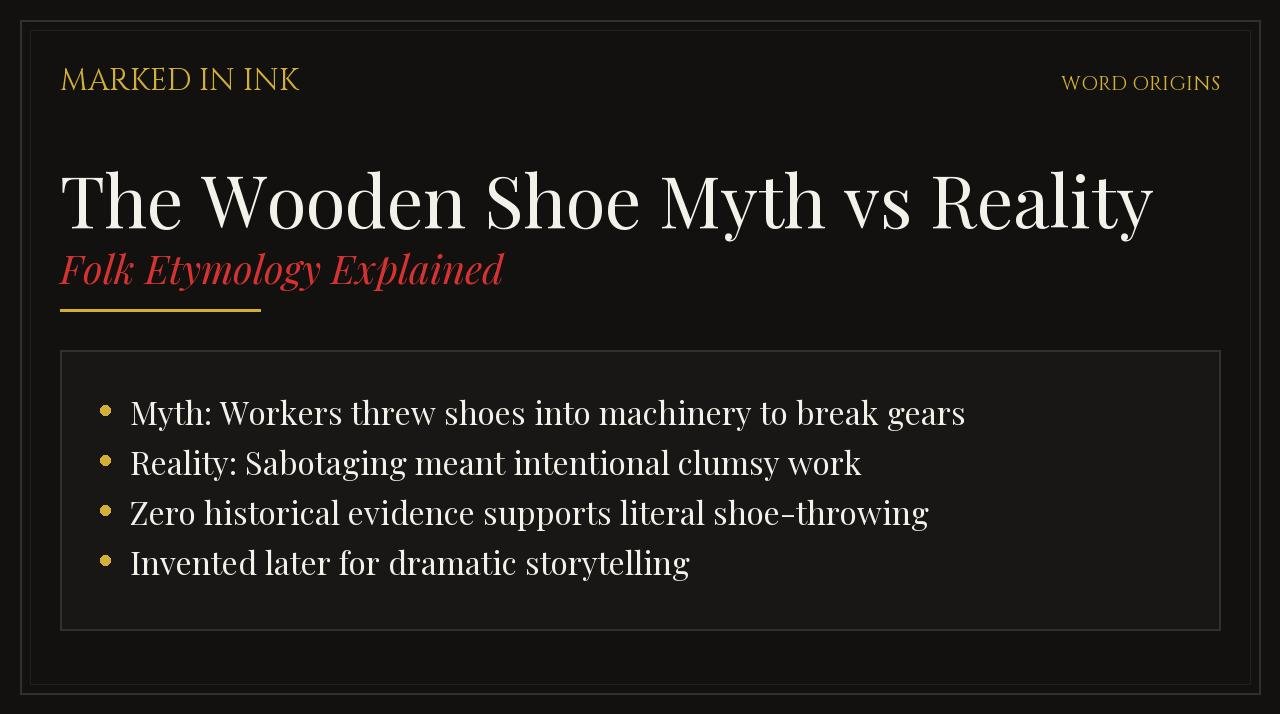
The most persistent myth surrounding this word involves literal wooden shoes. The story claims that disgruntled weavers threw their *sabots* into mechanical looms. By jamming the machinery, they brought production to a grinding halt. This vivid image of flying footwear is a favorite among storytellers and casual historians.
A Lack of Evidence
Despite its popularity, there is zero historical evidence to support this literal interpretation. Linguists and historians confirm that the word derives from the concept of “clumsy work”. It did not come from throwing shoes.
As Merriam-Webster notes, the “shoe in the machine” story is a folk etymology. It was likely invented later to provide a literal explanation. People wanted an engaging story for a word whose true origins were obscured.
The history of language is full of these myths. You can read similar tales about the origin of the word sandwich. Another great example is the origin of the word salary.
Frequently Asked Questions
Did workers really throw shoes into machines?
No historical records indicate that French workers threw their wooden shoes into factory machinery. This is a popular myth created after the fact to explain the word.
When was the word sabotage first used in English?
The word first appeared in English publications around 1910. It followed widespread use in French labor movements during the late 1890s.
What does the French word sabot mean?
The word *sabot* translates to a wooden shoe or clog. Peasants and laborers in rural Europe typically wore them.
How did sabotage become a military term?
During World War I and World War II, the term expanded beyond labor disputes. It began to describe the deliberate destruction of enemy infrastructure by covert operatives.
A Final Word on Sabotage
The next time you hear someone use this word, you can picture a clumsy worker in clogs. It is a brilliant example of how everyday objects shape the words we use. Language constantly adapts to reflect the struggles and strategies of regular people.
If you found this history interesting, you might enjoy reading about famous quotes and quotations. You can also explore other english idioms and meanings.


Alan Sledge is the writer and founder behind Letters & Letters. A lifelong lover of words, Alan has always been drawn to the small mysteries hidden in everyday language, why we say what we say, where our favorite sayings came from and the quotes that manage to put feelings into words better than we ever could ourselves.