
Bartenders shake crystal mixing glasses filled with ice, aromatic bitters, and amber spirits. Patrons sip elegant concoctions garnished with citrus peel or brandied cherries. The modern beverage world treats mixology as a respected culinary craft.
Yet beneath the sophisticated glassware rests one of the most peculiar nouns in the English lexicon. Why did English speakers combine the male rooster with animal tail plumage to describe blended alcohol? The colorful compound evokes barnyard imagery rather than refined social gatherings.
The true origin of the word cocktail connects eighteenth-century British horse racing with early American tavern culture. Behind the drink name lies a vivid equestrian metaphor about mixed breeds, docked tails, and invigorating morning draughts. The word traveled from English stables to Hudson Valley print shops before conquering the globe.
Quick Answer: Origin of the Word Cocktail
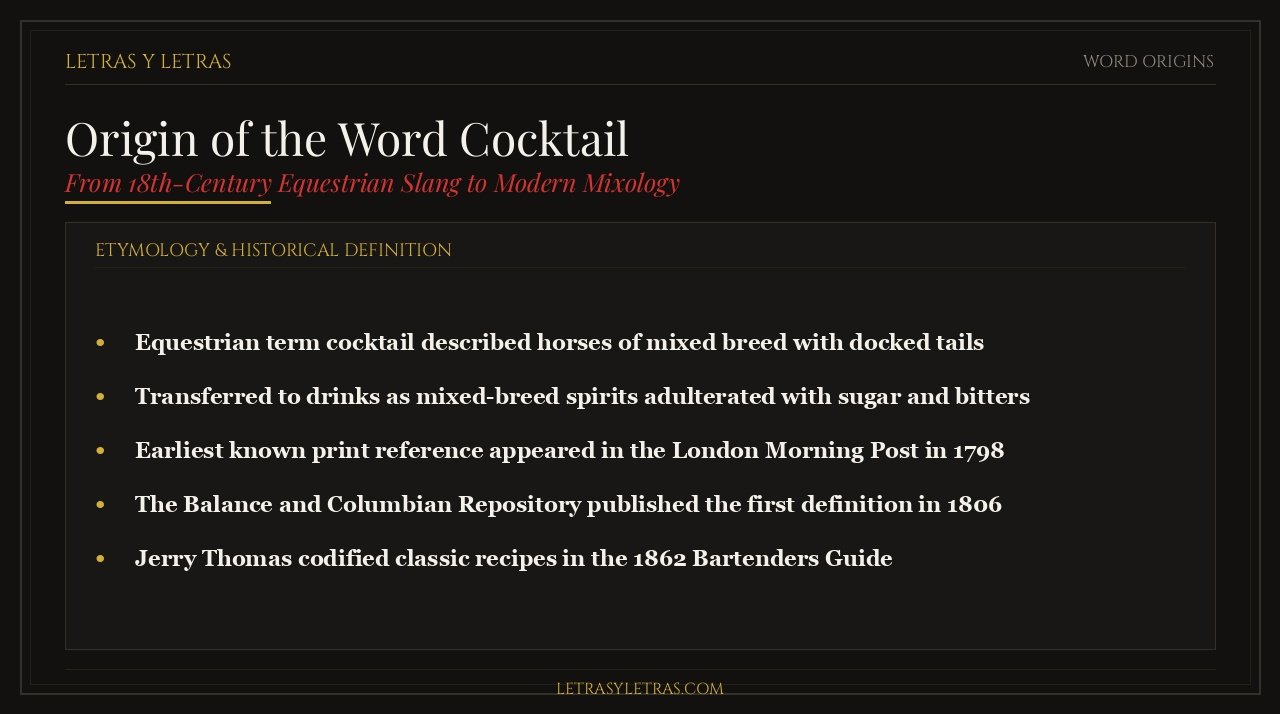
The word cocktail originated in eighteenth-century British equestrian slang before entering American tavern vocabulary. In English horse racing, thoroughbreds had long, flowing tails, while horses of mixed or impure pedigree had their tails docked short. These cropped tails stuck upward like a rooster tail, earning the animal the nickname cock-tail. Figuratively, cocktail denoted anything of mixed pedigree or someone pretending to be highborn. Early American drinkers applied the equestrian term to adulterated spirits diluted with water, sugar, and bitters. The first recorded American print definition appeared on May 13, 1806, in the Hudson Valley newspaper The Balance and Columbian Repository. Editor Harry Croswell defined it as a stimulating liquor composed of spirits, sugar, water, and bitters, establishing the formula of modern mixology.
Key Takeaways
- Cocktail originally described a mixed-breed horse with a docked, upright tail.
- Transferred to beverages to describe impure spirits mixed with sugar and bitters.
- First defined in print in 1806 by Hudson Valley editor Harry Croswell.
- Debunks popular folk myths involving French eggcups and rooster feather garnishes.
- Jerry Thomas codified classic cocktail recipes in his famous 1862 bartending guide.
The Modern Glass: A Familiar Word with a Bizarre Root
Modern cocktail menus showcase an astonishing variety of spirits, botanicals, and handcrafted infusions. Patrons order dry martinis, smoky old fashioneds, and crisp margaritas in lounges worldwide. The cocktail represents cosmopolitan relaxation and social celebration.
Few casual drinkers consider the literal meaning of the word while holding a chilled glass. Combining rooster and tail sounds absurd when applied to luxury dining. If the word were coined today, consumers would likely reject the poultry metaphor.
Definitions in the Merriam-Webster dictionary describe cocktail as an iced drink of seasoned liquor. The entry traces the noun back to early nineteenth-century American print. This compound term underwent remarkable cultural reinvention to achieve international acceptance.
Language often conceals humble rural origins beneath sophisticated modern practices. The cocktail was not created in a glamorous metropolitan salon. Its roots took shape amidst horse stables, countryside betting rings, and muddy colonial roads.
The Equestrian Theory: Docked Tails and Mixed Breeds
Etymologists and cocktail historians widely agree on the equestrian origin of the term. In eighteenth-century England, horse racing emerged as an elite national obsession. Aristocratic breeders placed enormous value on pedigree and bloodlines.
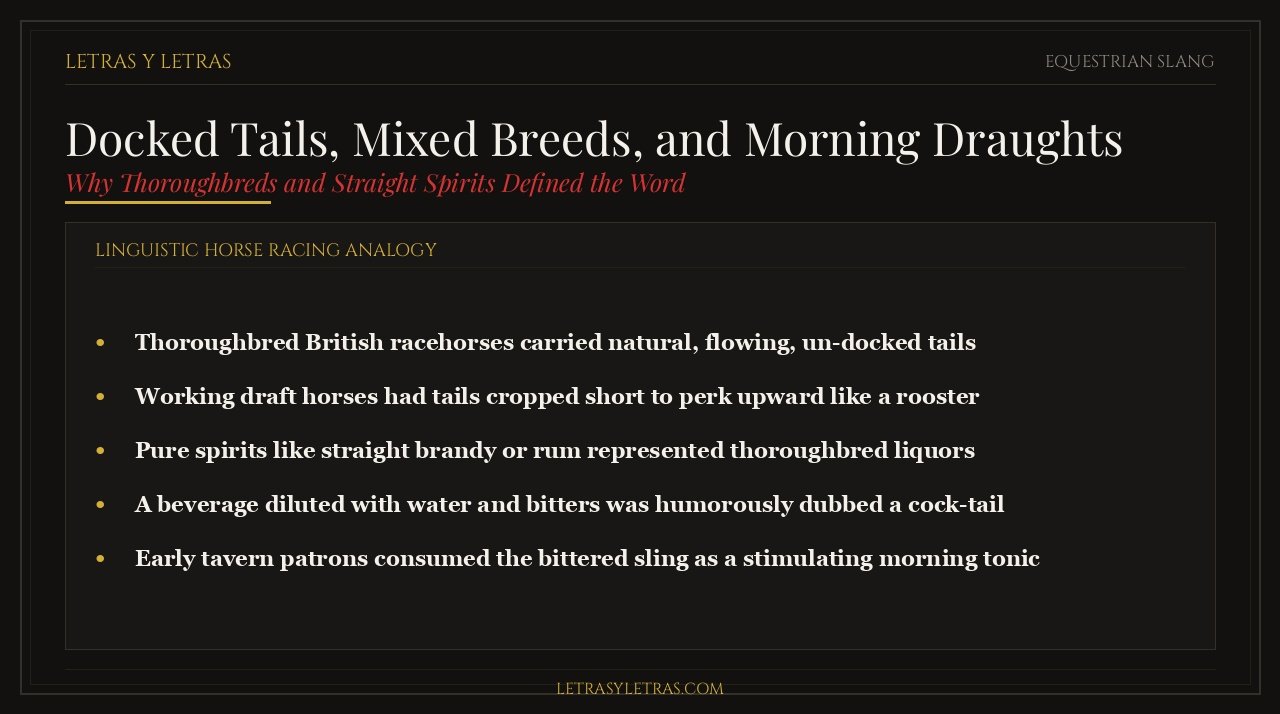
A thoroughbred racehorse was recognized by its natural, long, flowing tail. Working draft horses, hunters, and carriage horses of mixed breeding received different treatment. Grooms docked their tails short to keep them clear of carriage leather straps.
A horse with a cropped tail carried itself with an upright, perky posture. The tail resembled the stiff feathers of a proud rooster tail. Stable hands and horse traders referred to such non-thoroughbred animals as cock-tails.
English horse trainers performed a specific surgical procedure known as nicking to keep tails elevated. The procedure severed tail depressor muscles, forcing the docked tail permanently upward. A cocked tail instantly identified an animal as a working hack rather than pure nobility.
Scholars at the Online Etymology Dictionary trace this equine usage to the 1760s. By extension, the word became English slang for a person of common blood trying to pass as a gentleman. It signified something mixed, diluted, or lacking pure aristocratic pedigree.
From Impure Horses to Adulterated Liquors
The transition from equine slang to alcoholic beverages occurred through vivid tavern wit. In colonial taverns, straight spirits were viewed as thoroughbred liquors. Patrons drank neat brandy, pure Jamaican rum, or unadulterated whiskey.
When a drinker diluted straight spirits with cold water, raw sugar, and bitter botanicals, the liquor was no longer pure. The drink became a mixed breed in the glass. Barkeeps and patrons applied the stable term to this altered beverage.
The beverage was a cocktail because it lacked pure pedigree. In addition, the stimulating concoction gave tired patrons an invigorating physical jolt. It caused the drinker spirits to perk up like a docked horse tail.
Historical research in Smithsonian Magazine cocktail archives confirms this double meaning. The word denoted both the mixed nature of the recipe and its energizing effect on the drinker. Slang thrives when multiple metaphors reinforce each other.
The 1806 Milestone: Harry Croswell and the Hudson Valley Definition
While the word appeared sporadically in late eighteenth-century British print, America provided its definitive legal birth certificate. The historic moment occurred in Hudson, New York, in May 1806. A local newspaper called The Balance and Columbian Repository sparked the breakthrough.
An election campaign had recently concluded in Columbia County. The newspaper published a satirical breakdown of expenses incurred by a losing political candidate. This tab included charges for breakfast, tobacco, rum, and thirty-three glasses of cock-tail.
A curious subscriber wrote to the editor asking for clarification. The reader admitted he had never heard of cock-tail and inquired about its composition. Editor Harry Croswell published his legendary response on May 13, 1806.
Croswell wrote that cock-tail was a stimulating liquor made of spirits of any kind, sugar, water, and bitters. He noted that the potion rendered the heart stout and bold while befuddling the head. This single printed sentence established the eternal four-ingredient formula of classic mixology.
Croswell definition distinguished the cocktail from other popular colonial beverages. It was not a simple toddy, punch, or flip. The inclusion of medicinal bitters gave the drink its unique chemical identity.
Morning Eye-Openers and the Bittered Sling
Modern society consumes cocktails primarily during evening social hours. In early nineteenth-century America, however, the cocktail was consumed shortly after dawn. Working men and travelers used the drink as a medicinal morning eye-opener.
In colonial taverns, a blend of spirits, water, and sugar was called a sling. Adding digestive bitters to a sling produced what Croswell called a bittered sling. Bitters were concocted by apothecaries using cinchona bark, gentian root, and exotic herbs.
Patrons believed these bitter roots warded off malaria, settled sour stomachs, and stimulated digestion. Downing a small glass of bittered spirits at sunrise was viewed as sound preventative medicine. The alcohol carried the bitter botanicals down with agreeable warmth.
The morning cocktail provided an instant surge of energy before a grueling day of manual labor. Over several decades, the medicinal excuse faded while the enjoyment remained. The drink transitioned from farmhouses into bustling city hotel saloons.
Jerry Thomas and the Golden Age of Mixology
During the mid-nineteenth century, the American cocktail evolved into an internationally admired art form. Urban prosperity, commercial ice manufacturing, and high-end hotel bars created a golden age for bartenders. The leading figure of this era was Jeremiah Jerry Thomas.
Thomas was a showman, world traveler, and legendary bartender in New York and San Francisco. In 1862, he published The Bar-Tender Guide, also known as How to Mix Drinks. It was the first book ever published containing written cocktail recipes.
Thomas codified dozens of traditional American punches, sours, cobblers, and juleps. He defined the cocktail as a specific category requiring bitters, sugar, and spirits. Thomas flamboyant showmanship elevated bartending from tavern labor to theatrical entertainment.
Thomas became famous for inventing theatrical preparation techniques that dazzled saloon patrons. His signature showpiece was the Blue Blazer, involving two silver mugs and flaming whiskey. Streams of liquid fire vaulted between his hands, transforming simple drink service into magical theater.
American tourists carried cocktail culture across the Atlantic to London, Paris, and Berlin. Grand European hotels opened American bars to cater to international travelers. The word cocktail became a global symbol of American style and modernity.
Debunking Colorful Folklore and Folk Etymologies
Because cocktail is such a curious compound, popular imagination has invented numerous romantic legends. Bartending lore is filled with colorful explanations that crumble under historical scrutiny. Examining historical records dispels three prominent myths:
The most famous myth involves New Orleans apothecary Antoine Peychaud. Tour guides claim he served brandy in ceramic eggcups called coquetiers, mispronounced as cocktail. Peychaud did not arrive in New Orleans until decades after the word appeared in print.
A second myth claims tavern keepers poured the leftover dregs of liquor barrels into a common container. The tap of a cask was called a cock, and the dregs were called tailings. Such cheap mixture was allegedly called cock-tailings, but zero historical documents substantiate this tale.
A third myth claims an American tavern keeper decorated drinks with colorful feathers plucked from rooster tails. While charming for tavern theater, literary records provide no evidence for feathered garnishes in the 1700s. The equine mixed-breed theory remains the sole etymological explanation supported by period texts.
We saw similar folk myths debunked in our origin of the phrase crocodile tears guide. People constantly invent dramatic stories to explain colorful everyday expressions.
Chronological Milestones in the History of the Cocktail
The historical timeline below summarizes the major linguistic, culinary, and cultural milestones in the evolution of the cocktail:
| Historical Era | Linguistic Event | Primary Definition | Cultural Impact |
|---|---|---|---|
| 1760s to 1780s | British Equestrian Slang | Docked horse of mixed breed | Establishes the core metaphor of non-thoroughbred, mixed lineage. |
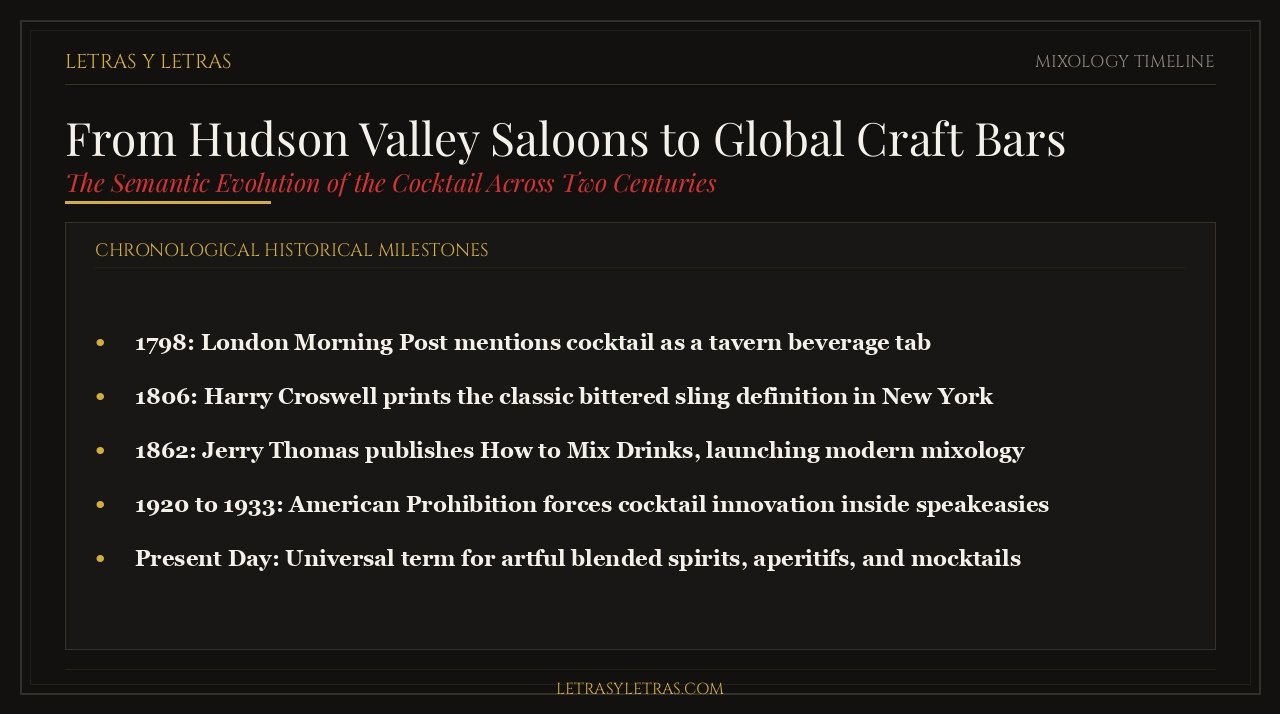
| 1798 | London Morning Post | Tavern drinking tab record | Earliest known printed appearance of the word applied to a drink. |
| 1806 | The Balance (Hudson, NY) | Spirits, sugar, water, bitters | Harry Croswell publishes the definitive four-ingredient recipe formula. |
| 1862 | Jerry Thomas Guide | First printed recipe manual | Codifies professional mixology and spreads American drinks globally. |
| 1920 to 1933 | American Prohibition | Speakeasy masking recipes | Fruit juices and syrups mask rough bootleg liquor, creating modern classics. |
| 1950s to 1970s | Mid-Century Cocktail Hour | Suburban martini culture | Transforms the drink into an iconic domestic ritual and corporate symbol. |
| 21st Century | Craft Cocktail Renaissance | Artisanal botanical mixology | Revives historic bitters, fresh ingredients, and non-alcoholic mocktails. |
Prohibition Speakeasies and the Craft Renaissance
The twentieth century brought dramatic disruptions and reinventions to cocktail culture. In 1920, the Eighteenth Amendment banned the manufacture and sale of intoxicating liquors in the United States. Prohibition closed legitimate hotel bars and drove drinking underground.
Illicit speakeasies operated with rough, unaged bathtub gin and industrial spirits. Bartenders relied heavily on fruit juices, ginger ale, and flavored liqueurs to conceal harsh flavors. Classic drinks were redesigned to make unpalatable alcohol drinkable for urban patrons.
Faced with criminalization at home, elite American bartenders migrated abroad to continue their trade. Expatriate bartenders found welcoming homes in London, Paris, and Havana. Iconic establishments like Harry New York Bar in Paris introduced American mixed drinks to international royalty.
Following the repeal of Prohibition in 1933, cocktails entered post-war corporate culture. The three-martini lunch became a hallmark of executive business life in the 1950s. Home entertaining popularized dedicated bar carts, cocktail shakers, and atomic-age glassware.
In the twenty-first century, a global craft cocktail renaissance emerged. Bartenders embraced nineteenth-century recipe books, rediscovered rare bitters, and used artisanal spirits. The humble tavern potion completed its rise to international gastronomic prestige.
The Cultural Psychology of Ritualized Drinking
Why does the cocktail command such enduring affection across modern society? The answer lies in the human desire for ritual and shared conviviality. Mixing a drink is a deliberate, mindful process of sensory preparation.
Measuring ingredients, stirring with ice, and expressing citrus oils transforms simple alcohol into a thoughtful experience. The cocktail marks the boundary between working daytime hours and evening personal relaxation. It offers a mindful pause before the evening begins.
We explored ancient evening boundaries and civic rest in our origin of the word curfew investigation. Societies have always used evening customs to signal the close of work.
Self-mastery and moderation remain essential when enjoying life pleasures. Discover enduring reflections on inner balance in our curated quotes on discipline collection. Governing individual appetites is the cornerstone of lasting peace.
Honesty with oneself is equally necessary when establishing personal habits. Discover ancient standards of truth in our origin of the word sincere investigation. True renewal demands unadulterated integrity.
Human beings often carry hidden vulnerabilities that require vigilant moderation. Explore mortal fragility in our analysis of the origin of the phrase Achilles heel. Identifying vulnerabilities prevents tragic downfall.
Recreational pastimes and risk-taking have always carried unexpected consequences. Trace medieval dice gambling in our origin of the word hazard investigation. Reckless indulgence carries lasting hazards.
Superstition and spatial language also reveal cultural shifts over time. Examine Roman left-hand omens in our origin of the word sinister study. Words evolve unexpected meanings across centuries.
Decisive personal commitment is required when breaking habitual dependencies. Learn how withdrawal medicine forged a universal idiom in our origin of the phrase cold turkey guide. Enduring difficulty opens the path to renewal.
Linguistic history also reminds us of playful, affectionate slang. Discover cheerful approval in our origin of the phrase cool beans guide. Playful phrases enrich everyday conversation.
Tranquil retreats provide the ultimate environment for joyful leisure. Explore ancient Persian walled gardens in our origin of the word paradise reflection. The human spirit constantly strives toward peace and renewal.
Frequently Asked Questions
What is the literal origin of the word cocktail?
The word cocktail came from eighteenth-century equestrian slang describing non-thoroughbred horses with docked, perky tails resembling roosters.
When was the word cocktail first defined in print?
Harry Croswell published the first definition on May 13, 1806, in The Balance and Columbian Repository in New York.
What were the four original ingredients in a cocktail?
The original 1806 formula required spirits of any kind, sugar, water, and aromatic bitters, known as a bittered sling.
Did Antoine Peychaud invent the cocktail in New Orleans?
No, Antoine Peychaud did not invent the cocktail. Peychaud created his famous bitters decades after the word was recorded in print.
Why were cocktails originally consumed in the morning?
Early Americans drank cocktails at sunrise as medicinal eye-openers, believing digestive bitters stimulated stamina and prevented illness.
Who wrote the first cocktail recipe book?
Jerry Thomas published the first cocktail recipe guide in 1862, titled The Bar-Tender Guide or How to Mix Drinks.
Alan Sledge is the lead writer at letrasyletras.com, uncovering historical wisdom and word origins.


Alan Sledge is the writer and founder behind Letters & Letters. A lifelong lover of words, Alan has always been drawn to the small mysteries hidden in everyday language, why we say what we say, where our favorite sayings came from and the quotes that manage to put feelings into words better than we ever could ourselves.

Alan Sledge
Alan Sledge is the founder and lead researcher behind Letters & Letters. A lifelong student of linguistic history, he cross-references every word origin, idiom, and quote against primary archival manuscripts, the Oxford English Corpus, and 18th-century print lexicons.