
In 1530, William Tyndale invented a new English word. He needed a way to translate a difficult biblical concept. His solution changed our language forever.
Quick Answer: Origin of the Word Scapegoat
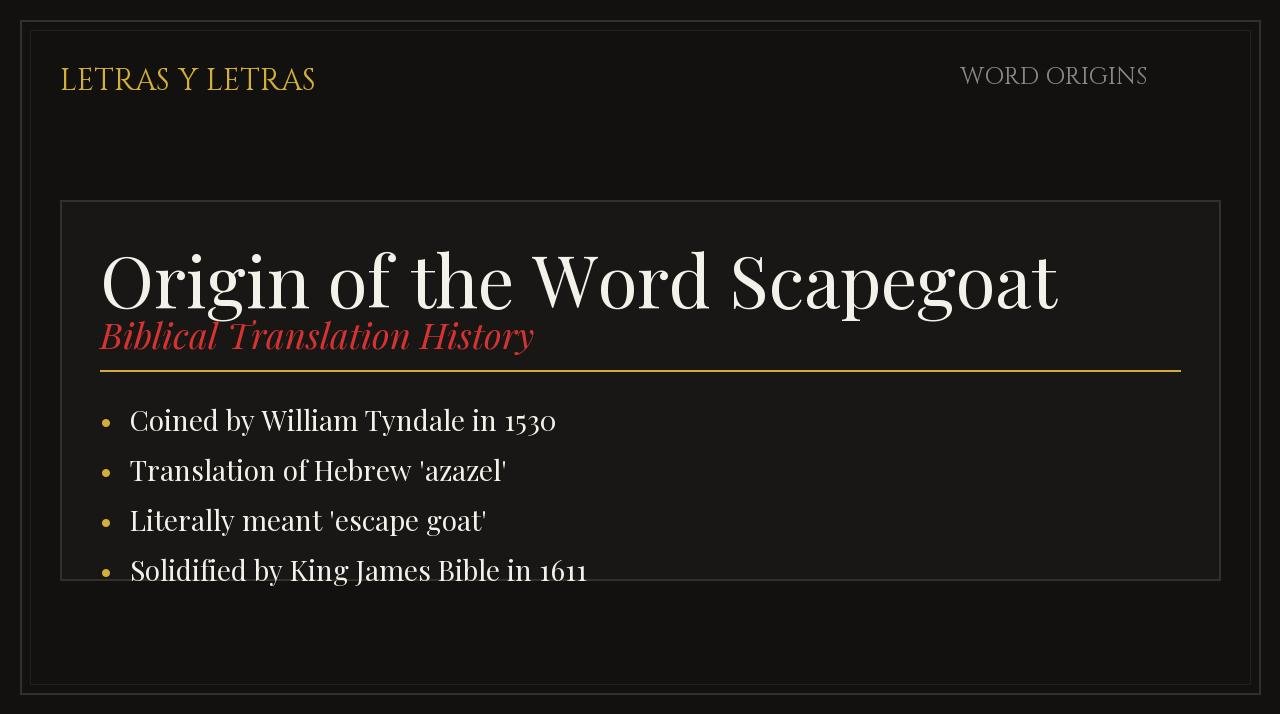
The origin of the word scapegoat dates back to 1530. William Tyndale created it for his English Bible translation. He translated the Hebrew term “azazel” as “escape goat.” This term described a goat used in the Yom Kippur ritual. The High Priest confessed the sins of Israel over it. Then, the community released this animal into the desert. Over time, “escape goat” contracted to “scapegoat.” The word eventually shifted from a biblical animal to a psychological metaphor. Today, it describes someone who is unjustly blamed.
Key Takeaways
- William Tyndale coined the term in 1530.
- It appeared in his English translation of the Pentateuch.
- The word was originally “escape goat.”
- It translated the complex Hebrew word “azazel.”
- The term later became a psychological concept of misplaced blame.
The word was “scapegoat.” It described a literal goat driven into the desert. This animal carried the sins of an entire community. The ritual was central to ancient religious practices.
Today, it appears in office politics and public scandals. Psychology classes also study it. The origin of the word berserk is wild, but this history is surprisingly calculated.
Let us explore the fascinating history of this powerful term.
The Biblical Roots in Leviticus
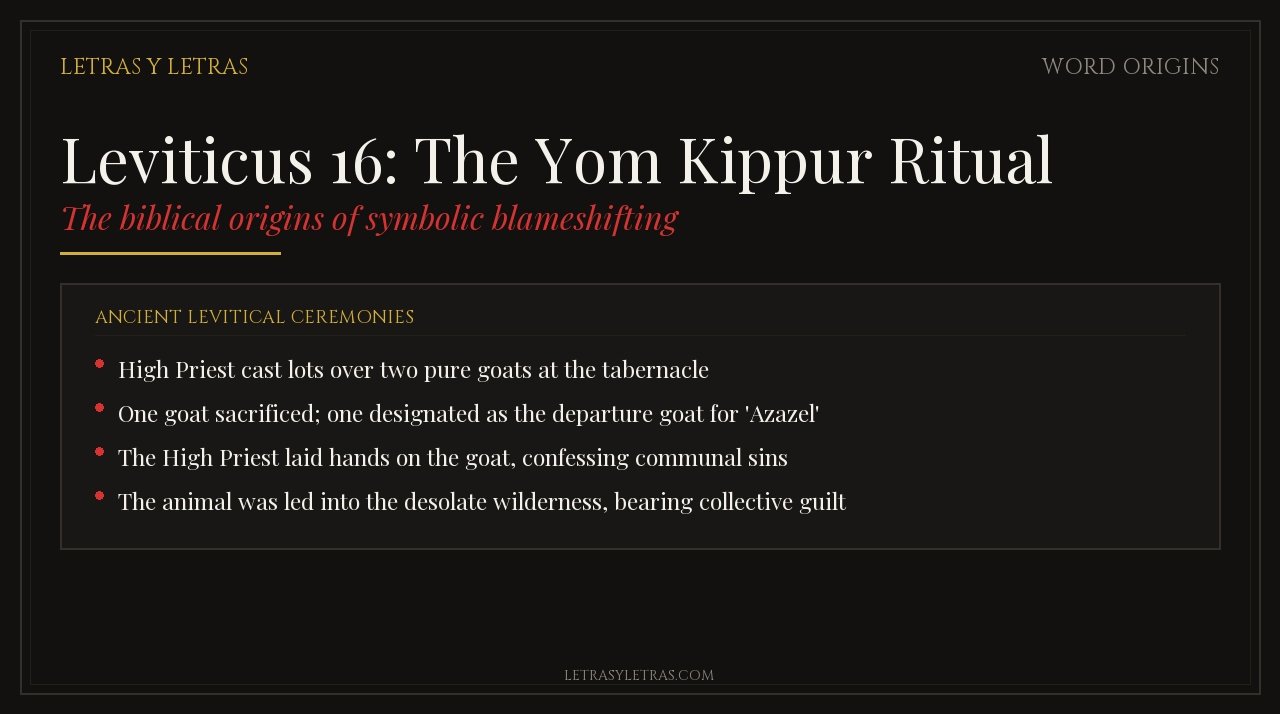
The story begins in the Book of Leviticus. Chapter 16 details the rituals for Yom Kippur. This is the Day of Atonement in Judaism.
The High Priest had to perform a specific ritual. He presented two male goats before the Lord. Then, he cast lots to decide their fates.
One goat was chosen for sacrifice to God. The other animal had a very different destiny. This second creature was the “azazel” goat.
The priest confessed all the sins of Israel over it. Next, the community sent it away into the desert.
Translating the Untranslatable
Tyndale faced a massive challenge in 1530. He was translating the Hebrew Bible into English. The scholar encountered the word “azazel.”
This term puzzled theologians for centuries. Some believed “azazel” was the name of a wilderness demon. Others thought it meant a steep cliff or precipice.
A few argued it simply meant “the goat that departs.” Tyndale leaned toward this final interpretation.
He decided to create a compound word. The man combined “escape” and “goat.” The resulting term effectively captured the animal’s physical action.
The Online Etymology Dictionary notes this brilliant linguistic solution.
The Shift to Scapegoat
Tyndale’s original spelling was “escape goat.” Language naturally seeks efficiency over time. The “e” was eventually dropped in common usage.
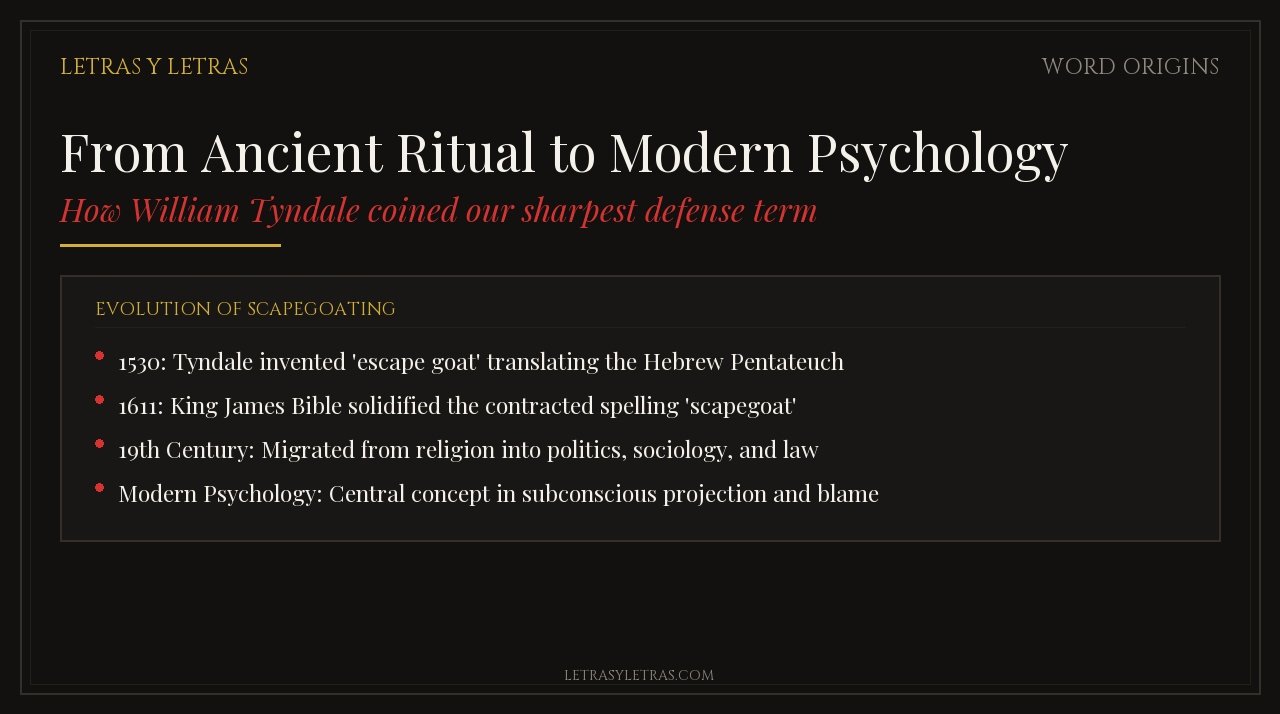
This term became “scapegoat” in written English. The King James Bible was published in 1611. It cemented Tyndale’s word in the English language.
This translation reached millions of readers worldwide. It became universally recognized. The Merriam-Webster dictionary traces its evolution clearly.
A literal religious act became a foundational English vocabulary word. The origin of the word sandwich involved food, while this involved theology.
Evolution into Modern Psychology
The word maintained its literal biblical meaning for centuries. Then, a shift occurred in the nineteenth century. Writers began applying it to human situations.
They used it as a metaphor. The metaphor was powerful and universally understood. A person forced to bear the blame of others became a scapegoat.
The origin of the phrase caught red handed describes guilt, but this describes innocence. Blameless people suffer for the guilty.
This concept deeply fascinated early psychologists. They saw it as a defense mechanism. People project their own faults onto others.
This projection relieves their personal guilt and anxiety.
Office Politics and Corporate Blame
We see this mechanism frequently in modern workplaces. A project fails due to poor management. The leadership team avoids taking responsibility.
They blame a junior employee instead. This junior worker becomes the corporate scapegoat. The group preserves its own reputation.
This ritual is psychological rather than religious. The outcome is often devastating for the targeted individual.
The origin of the word salary relates to compensation, while this relates to termination. Groups use this tactic to maintain unity. They bond over a shared enemy.
Historical Table of Evolution
We can track this word through different eras. It changed significantly over five centuries. Here is a brief timeline.
| Era | Meaning | Context |
| – | – | – |
| 1530 | Escape goat | Tyndale Bible translation |
| 1611 | Scapegoat | King James Version |
| 19th Century | Person bearing blame | Literature and sociology |
| 20th Century | Psychological projection | Modern psychology |
Common Myths and Misconceptions
Many people misunderstand the original biblical ritual. They assume the goat was punished or killed. This is completely false.
One goat was sacrificed. The scapegoat was simply sent away. It was released alive into the wilderness.
Its purpose was removal, not execution. This animal carried the sins far away from the camp.
Another myth involves the word “azazel.” Some modern readers think it is a common Hebrew word. It appears nowhere else in the Hebrew Bible.
Its exact original meaning remains debated among theologians.
The Danger of Scapegoating Today
Recognizing this behavior is vital in our society. It happens in politics, families, and online communities. A complex problem arises, and people demand a simple villain.
We see this dynamic constantly. Blaming a single person rarely solves the actual issue. It just creates a temporary illusion of control.
The english idioms and meanings we use reveal our nature. We want easy answers.
True accountability requires looking inward. We must acknowledge our own collective faults. Refusing to cast stones is a sign of maturity.
Frequently Asked Questions
What is the literal meaning of scapegoat?
The literal meaning is an “escape goat.” It was a goat allowed to escape into the wilderness. This animal carried the confessed sins of the ancient Israelites.
Who invented the word scapegoat?
William Tyndale invented the word in 1530. He created it for his English translation of the Bible. The scholar needed a way to translate the Hebrew word “azazel.”
Is the word scapegoat in the Bible?
Yes, it is in the Bible. It appears prominently in Leviticus 16 in the King James Version. The text describes the rituals for the Day of Atonement.
How is scapegoating used in psychology?
In psychology, it is a defense mechanism. People project their negative traits or mistakes onto someone else. This helps them avoid dealing with their own guilt or anxiety.
What is the opposite of a scapegoat?
A golden child is often considered the opposite in family dynamics. A hero or savior figure might be the opposite in broader social contexts. These individuals receive unearned praise instead of unearned blame.
Language tells the story of human nature. A translation choice in 1530 gave us a great mirror for our flaws. We can now name the unfairness we see around us.
The history of this word reminds us to be fair. It urges us to stop shifting blame. Next time you see someone unfairly targeted, remember the ancient goat.
Choose to break the cycle.