
Quick Answer: Origin of the Phrase Kick the Bucket
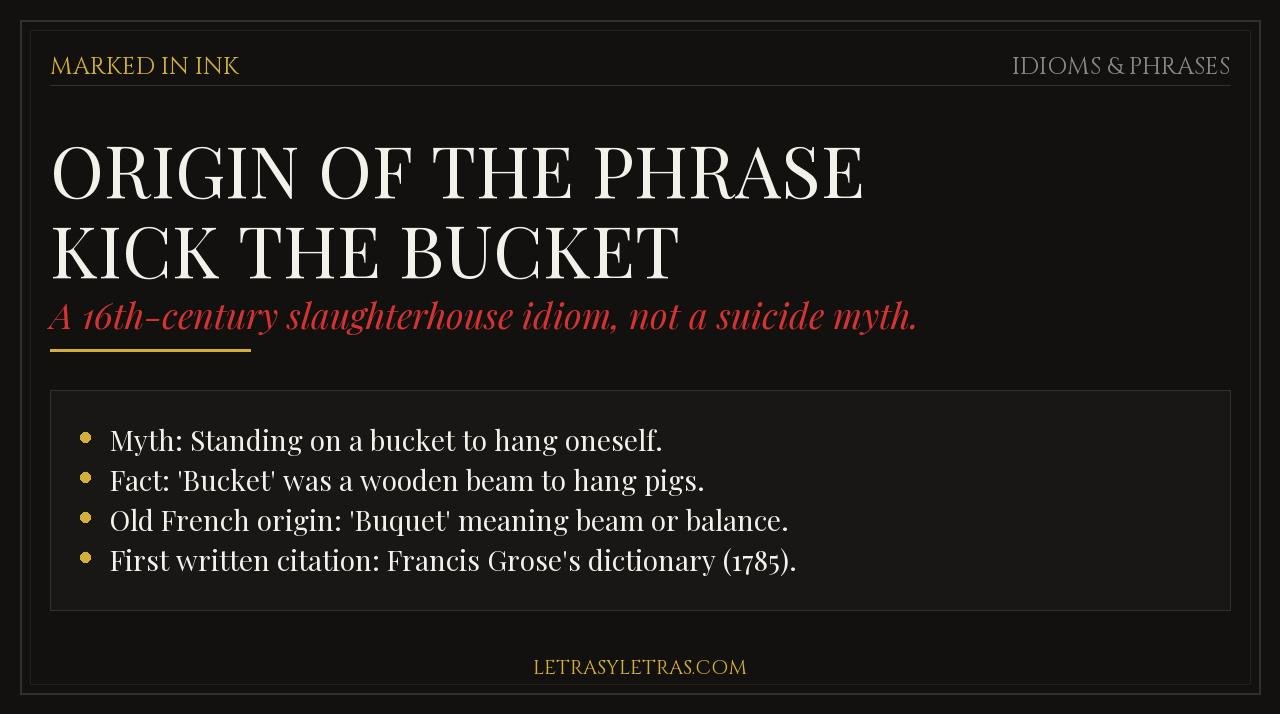
“Kick the bucket” is a euphemism for dying. Its earliest confirmed written record appears in Francis Grose’s Classical Dictionary of the Vulgar Tongue (1785), where “bucket” refers to a wooden beam or yoke used in slaughterhouses to hang pigs for slaughter, derived from the Old French word trebucher or the Norfolk dialect term meaning a beam. The popular theory that the phrase refers to suicide by hanging from a kicked-over bucket has almost no historical support. Scholars widely favor the slaughterhouse beam theory, as the word “bucket” was genuinely used in that context in 18th-century England.
Key Takeaways
- The phrase appears in Francis Grose’s Classical Dictionary of the Vulgar Tongue (1785).
- “Bucket” likely refers to a wooden beam or yoke used in slaughterhouses, not a pail.
- The hanging suicide myth (kicking over a bucket stool) has little to no historical evidence.
- Old French trebucher and Norfolk dialect both used “bucket” to mean a wooden beam.
- The OED’s earliest figurative citation dates to the late 18th century.
This beam name came from the Old French word buquet. As the slaughtered pigs spasmed, they literally kicked this wooden beam. The common myth of kicking away a pail to hang oneself is entirely false.
There is no historical evidence supporting the suicide stool theory. The first printed definition appeared in Francis Grose’s 1785 dictionary. This idiom shows how archaic agricultural terms morphed into modern slang.
It remains one of the most contested origins in English history. Scholars debate its exact path into common vernacular. Yet the slaughterhouse theory holds the strongest evidence.
Most folks picture a grim scene when they hear this idiom. The mind instantly conjures an image of a person standing on an overturned pail. They kick the pail away to meet their end.
This mental picture is vivid and feels like historical fact. It is easy to accept this simple explanation for our common idiom about death. However, the true history is far more nuanced.
Etymologists have debated the roots of this idiom for centuries. The story reveals fascinating details about archaic agricultural practices. We will explore the historical evidence to uncover exactly where this phrase began.
The Suicide Myth Debunked
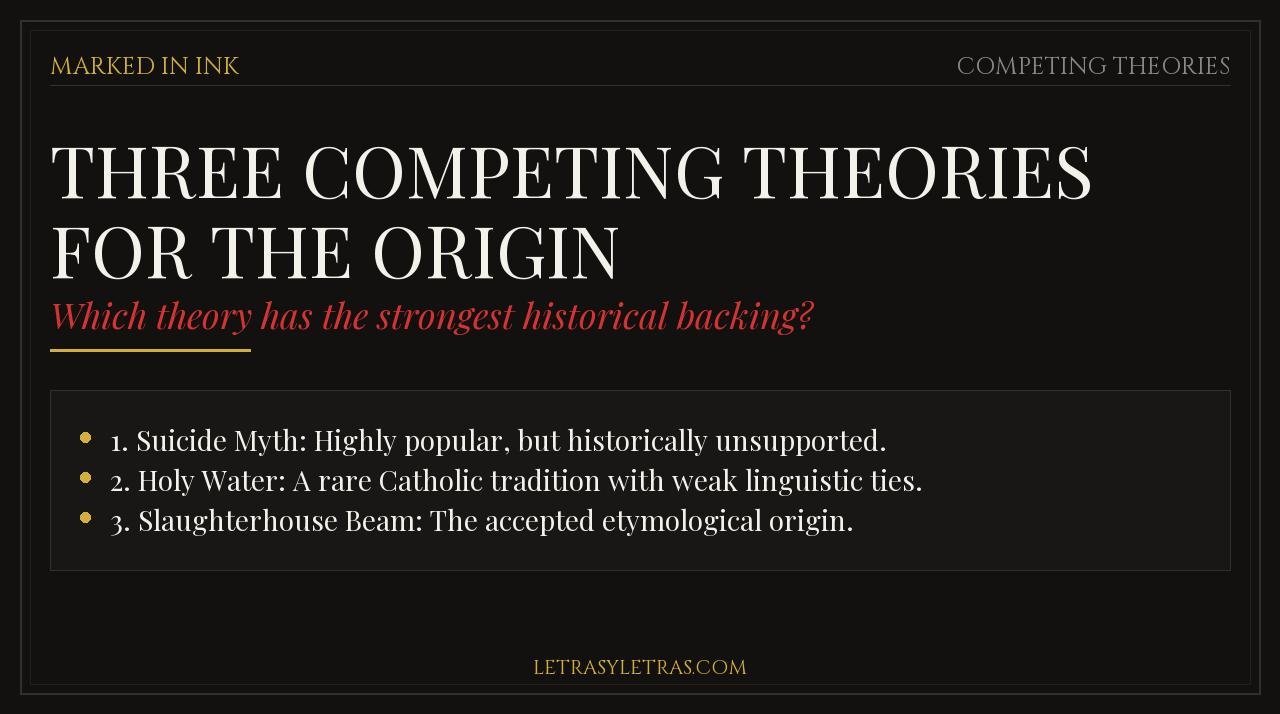
The most widespread theory about this idiom is the suicide method. It assumes a person wanting to end their life would stand on a bucket. They would tie a noose and kick the bucket out from under their feet.
This explanation is satisfying because it makes literal sense. The action directly results in the person dying. Despite its logical appeal, there is no historical evidence supporting this origin.
Early instances of people taking their own lives rarely involved buckets. Stools or chairs were far more common household items used for such acts. The association between suicide and buckets seems to be a retroactive explanation.
To grasp the real history, we must look at regional dialects. The answer lies in the gruesome reality of early agricultural practices. If you like dark word histories, read about the origin of the phrase caught red handed.
The Old French Buquet Theory
The most credible theory traces the origin back to slaughterhouse equipment. In the 16th century, butchers used a heavy wooden beam. This wooden beam, or yoke, was called a “bucket.”
This term did not refer to a pail for holding water. Instead, it was derived from the Old French word buquet. This old term simply meant a balance or a beam.
When pigs were slaughtered, they would often experience post-mortem muscle spasms. During these involuntary twitches, the animals would kick the wooden beam. They were quite literally kicking the bucket.
This slaughterhouse imagery eventually morphed into a general slang term for dying. It transitioned from a specific agricultural term to a broad metaphor. Similar linguistic shifts happened with the origin of the phrase break a leg.
First Written Citations
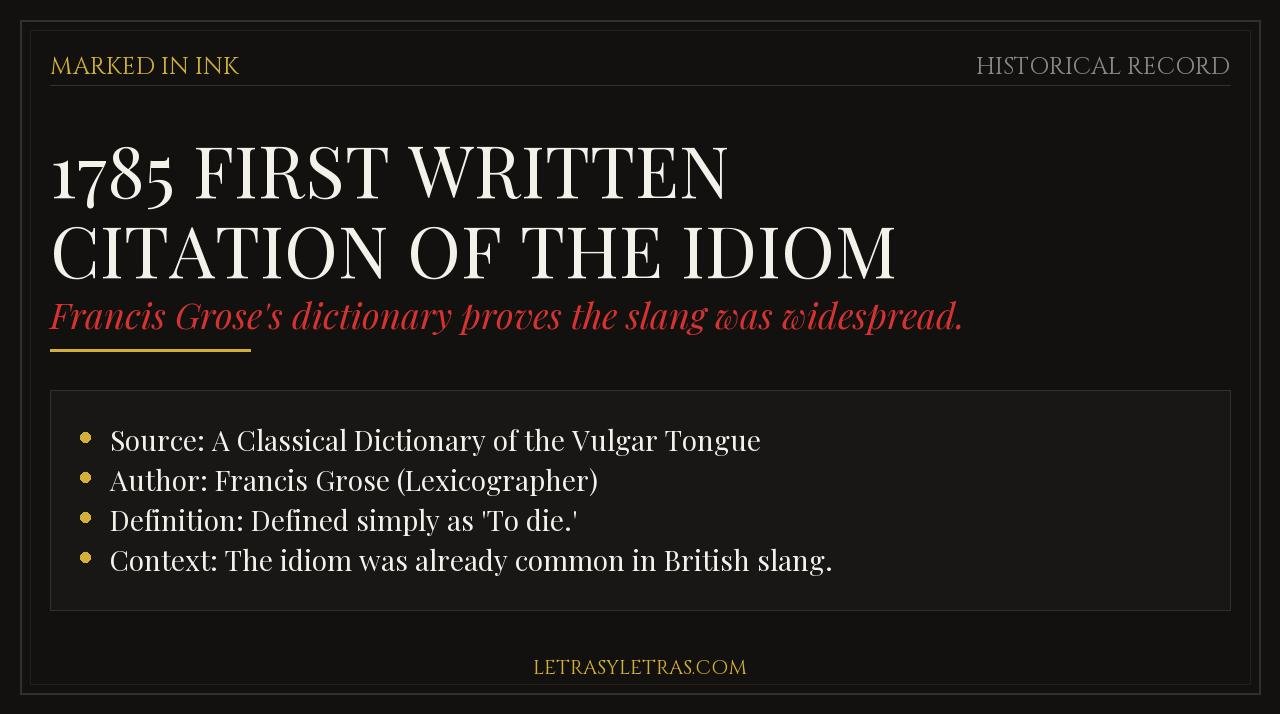
Tracing the written record helps pinpoint when a phrase entered popular usage. The earliest clear definition appears in a famous dictionary from 1785. Francis Grose published A Classical Dictionary of the Vulgar Tongue.
Grose documented the slang of the era in this dictionary. He defined the phrase simply as meaning to pass away. This 1785 citation proves the idiom was already well established.
It is highly probable the phrase was spoken for decades prior. Written records often trail behind spoken language by a significant margin. The Oxford English Dictionary notes earlier usages of the word referring to a beam.
Finding accurate historical records is crucial for etymology studies. It separates facts from the folklore that surrounds famous idioms. You can explore more historical linguistic records in our guide to famous quotes and quotations.
The Catholic Holy Water Theory
A secondary theory involves old Catholic burial traditions. In some areas, mourners placed a bucket of holy water near a deceased person. Visitors who came to pay their respects would sprinkle the body.
According to this theory, a dead body might stiffen suddenly. This rigor mortis could accidentally knock over the holy water bucket. Alternatively, mourners might bump into it during a wake.
While this is an interesting piece of cultural history, linguistic experts disagree. The jump from a bucket of holy water to a slang term is steep. Scholars consider the slaughterhouse theory to be the dominant explanation.
Many phrases have religious origins, like the origin of the phrase bless you. However, this particular idiom seems rooted in the butcher shop.
Modern Usage and Pop Culture
Today, this phrase is deeply embedded in the English language. It has even spawned new terms like the popular bucket list. A bucket list details things a person wants to do before dying.
This modern spin-off shows how idioms continue to evolve today. The phrase is used casually and often carries a humorous tone. It is rarely used in formal or highly respectful contexts.
It belongs to the colorful, informal side of our vocabulary. If you want to learn more about how informal language works, check out our guide. We explain English idioms and meanings.
From a 16th-century slaughterhouse to a modern checklist, its history is remarkable. It highlights the strange and unpredictable paths that words take. For another fascinating story, read about the origin of the word sandwich.
Frequently Asked Questions
What is the literal meaning of kick the bucket?
The literal meaning refers to striking a bucket with your foot. Historically, it refers to a slaughtered animal kicking a wooden beam. This beam was called a bucket during post-mortem spasms.
Who first used the phrase kick the bucket?
The exact first user is unknown, as it started in spoken slang. The first recorded definition was by lexicographer Francis Grose. He published it in his 1785 dictionary.
Is a bucket list related to the phrase kick the bucket?
Yes, the term bucket list directly derives from the phrase. It refers to a list of experiences a person hopes to accomplish. People want to achieve these goals before they pass away.
Does the phrase come from suicide by hanging?
No, this is a common myth with no backing. There is no historical evidence linking the phrase to suicide. The slaughterhouse beam theory is the historically accurate origin.
What did the word bucket mean in Old French?
In Old French, the word buquet referred to a balance. It could also refer to a wooden beam. This specific meaning carried over into English dialects.
I hope this history clears up the misconceptions surrounding this famous phrase. The true origins of our daily language are often hidden. Keep questioning the words you use to find fascinating stories.
Alan Sledge
Lead Writer, Letras y Letras
Sources: Online Etymology Dictionary entry for bucket | Merriam-Webster dictionary


Alan Sledge is the writer and founder behind Letters & Letters. A lifelong lover of words, Alan has always been drawn to the small mysteries hidden in everyday language, why we say what we say, where our favorite sayings came from and the quotes that manage to put feelings into words better than we ever could ourselves.

Alan Sledge
Alan Sledge is the founder and lead researcher behind Letters & Letters. A lifelong student of linguistic history, he cross-references every word origin, idiom, and quote against primary archival manuscripts, the Oxford English Corpus, and 18th-century print lexicons.