
Every living language invents fresh words when existing ones fail to capture human experience. In centuries past, sailors, gamblers, and poets coined our favorite phrases over drinks in taverns. Today, online subcultures create vocabulary at breakneck speed across gaming servers and comment feeds.
Among the oddest modern coinages to emerge from social media is inbredward. Readers who encounter the term often wonder whether it represents an ancient surname, a literary reference, or a digital insult. The answer reveals how modern animation, surreal comedy, and linguistic morphology collide.
Quick Answer: What Does Inbredward Mean?
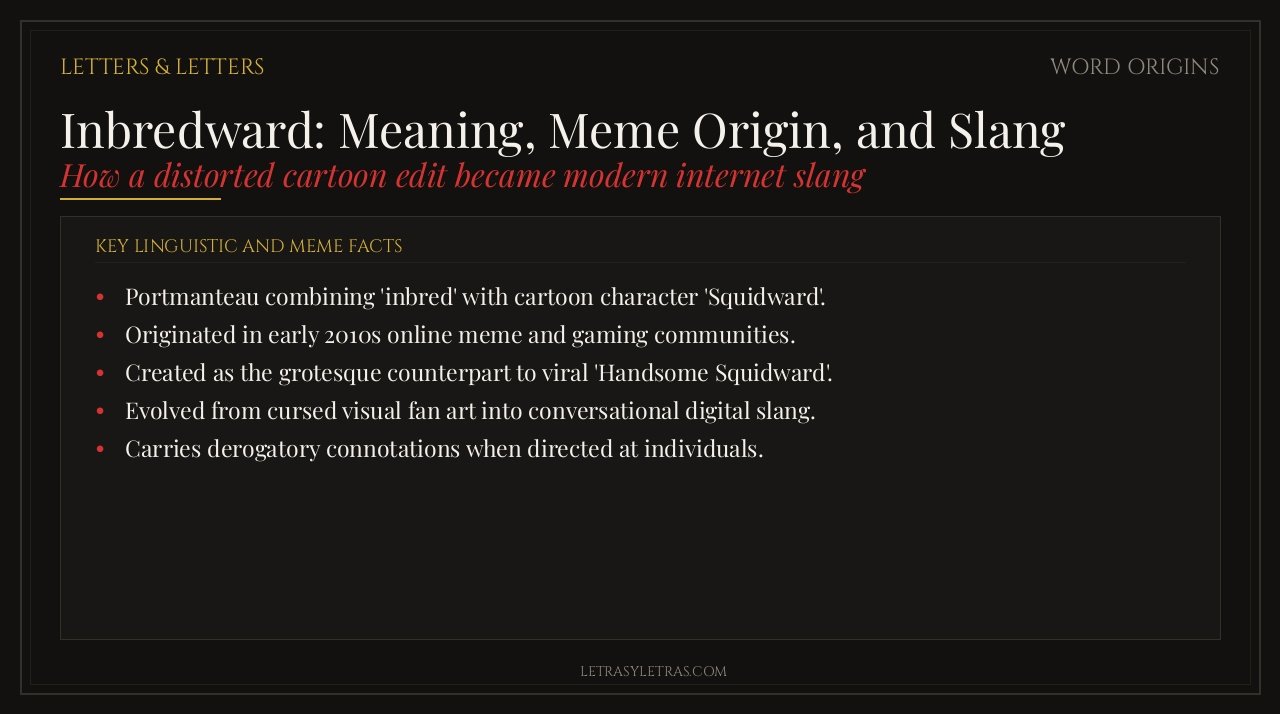
Inbredward is an informal internet slang term and meme archetype. It originated as a portmanteau blending the insult inbred with the cartoon character Squidward from SpongeBob SquarePants. The term first described grotesque, distorted, or poorly drawn fan edits of Squidward that circulated on forums around 2010. Over time, the label shifted into general online gaming and social slang. Today, users deploy it to mock foolish decisions, awkward blunders, or clumsy physical coordination.
Key Takeaways
- Blends the derogatory adjective inbred with the cartoon character Squidward Tentacles.
- Emerged in online meme communities around 2010 as the polar opposite of Handsome Squidward.
- Migrated from surreal visual fan art into competitive gaming voice chats and TikTok commentary.
- Serves as informal slang to mock foolish behavior, bad decisions, or awkward clumsiness.
- Carries offensive undertones due to its root word and remains strictly unsuitable for polite conversation.
What Does Inbredward Mean in Internet Slang?
To understand inbredward, look at how digital communities communicate. Online users love shorthand. They compress complex cultural ideas into punchy, single-word labels.
In contemporary social commentary, inbredward describes a person acting foolish, obtuse, or bafflingly uncoordinated. When a video game teammate runs into a wall, players might shout the name in frustration. It expresses exasperation with someone making an obvious blunder.
The term is rarely literal. Nobody using the word is making a serious genetic assessment.
Instead, it operates as hyperbolic ridicule. It paints an exaggerated mental image of absurdity and clumsy failure.
Context determines the tone. Among close friends in gaming lobbies, it often functions as self-deprecating banter. Yet when directed at strangers, the label quickly turns hostile and cruel.
The Morphological Anatomy of a Digital Portmanteau
From a linguistic perspective, inbredward is a classic portmanteau. A portmanteau blends the sounds and meanings of two distinct words into one single lexical item.
The word fuses two recognizable stems. The primary modifier is inbred, an adjective carrying centuries of heavy social stigma. Its base noun is Squidward, the irritable cephalopod neighbor from Nickelodeon’s famous animated series.
Linguists at the Merriam-Webster Lexical Archives track how blended words enter English. Authors like Lewis Carroll popularized the technique in Victorian poetry. Today, internet users follow identical phonetic rules without formal grammatical training.
Speakers drop the first syllable of the cartoon character’s name. They replace Squid with Inbred. The result preserves the original name’s cadence while injecting biting humor.
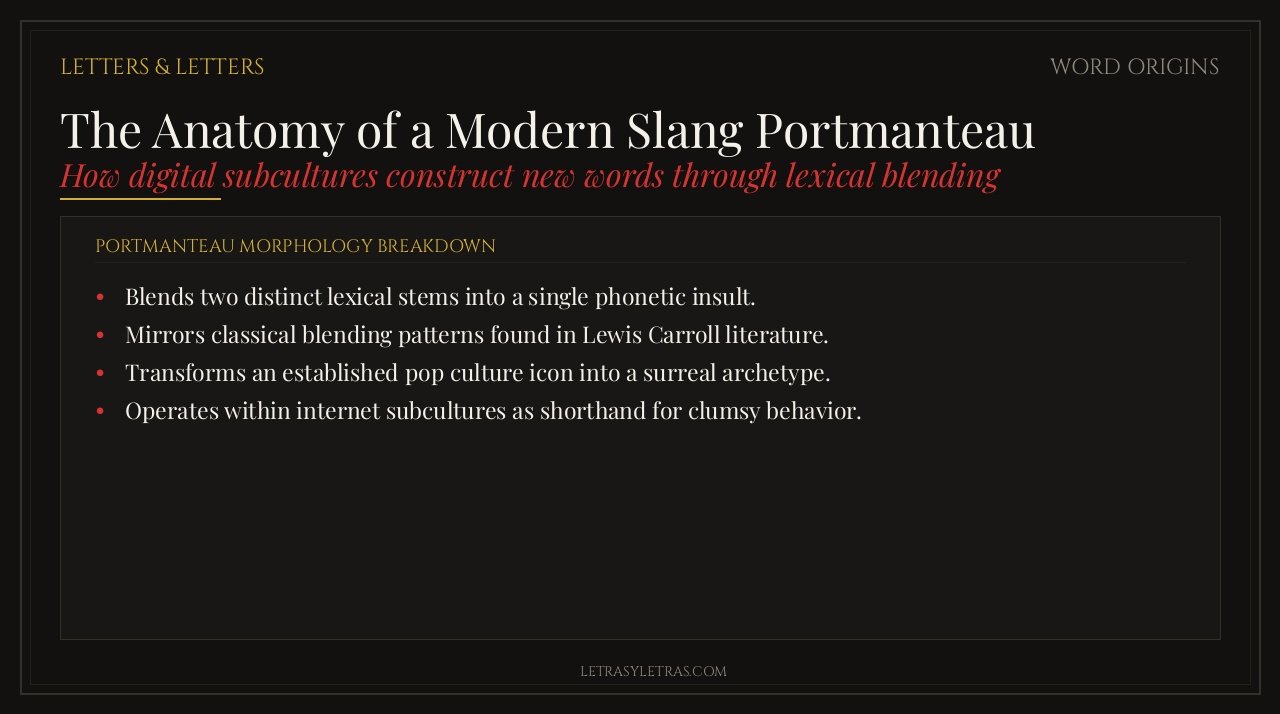
A morphological breakdown showing how internet subcultures blend lexical roots into fresh slang.
The SpongeBob Meme Gene: From Handsome Squidward to Cursed Art
No animated television program has generated more internet memes than SpongeBob SquarePants. The show debuted in 1999, creating iconic personalities recognized worldwide.
Among all the characters in Bikini Bottom, Squidward Tentacles stands apart. He represents cynical adulthood surrounded by naive optimism. Squidward is bitter, pretentious, and constantly frustrated by his surroundings.
In November 2007, Nickelodeon broadcast the season five episode titled The Two Faces of Squidward. In the episode, a door strikes Squidward in the face. The blunt trauma miraculously reconstructs his facial bones into chiseled, classical beauty.
This handsome persona became an internet sensation. Web users created thousands of images praising Handsome Squidward as the pinnacle of facial symmetry. The character became a visual shorthand for perfection and self-satisfaction.
Every cultural phenomenon eventually sparks an equal and opposite reaction. Internet culture thrives on irreverence and grotesque subversion. Creators began producing distorted, melted, and warped images of Squidward.
These cursed illustrations rejected aesthetic beauty. They exaggerated Squidward’s prominent nose, drooping eyes, and hollow cheeks into nightmarish caricatures. The online community needed a title for these deformed iterations, coining inbredward as the comical antithesis.
Grotesque Art and Internet Folklore: A Historical Mirror
The visual roots of cursed cartoon edits did not originate on modern digital message boards. Art historians trace this appetite for the grotesque back to medieval manuscripts and Renaissance masters.
In fifteenth-century Flanders, painter Hieronymus Bosch filled canvases with nightmarish hybrid creatures. Stone masons carved contorted, gargoyle faces on European cathedrals to mock human folly. In both cases, distortion mirrored spiritual and moral frailty.
During the eighteenth and nineteenth centuries, British cartoonists like James Gillray published savage political caricatures. They stretched noses, enlarged chins, and twisted postures to mock royal figures. Readers laughed at the physical grotesque because it punctured unearned authority.
Modern internet creators practice that identical artistic subversion. By warping Squidward into inbredward, digital artists strip a famous character of his dignity. The digital medium changes, but the human fascination with distorted caricature remains unchanged across centuries.
Semantic Shift: How a Visual Meme Became Verbal Slang
Words rarely remain confined to their original visual boundaries. Linguistic history shows that words constantly undergo semantic drift, broadening their application over time.
Consider how historical terms changed. In our analysis of the origin of the word handicap, an old hand-in-cap wagering game became a sports term and everyday word. Similarly, in our study of the origin of the phrase cold feet, a tavern poker excuse became a romantic idiom.
Inbredward followed this exact evolutionary arc. Between 2010 and 2015, the word lived primarily on image-sharing boards and social media forums. Users posted the label alongside cursed Squidward drawings.
Soon, multiplayer online games became central social hubs for younger generations. In fast-paced games like Call of Duty, Minecraft, and Roblox, players need rapid insults to describe frustrating blunders. Typing or speaking long criticisms wastes valuable seconds during matches.
Gamers lifted the word from image boards and dropped it directly into voice chat. Calling a teammate by the name signaled that their play was absurdly clumsy. The word severed its link to specific pictures and became general descriptive slang.
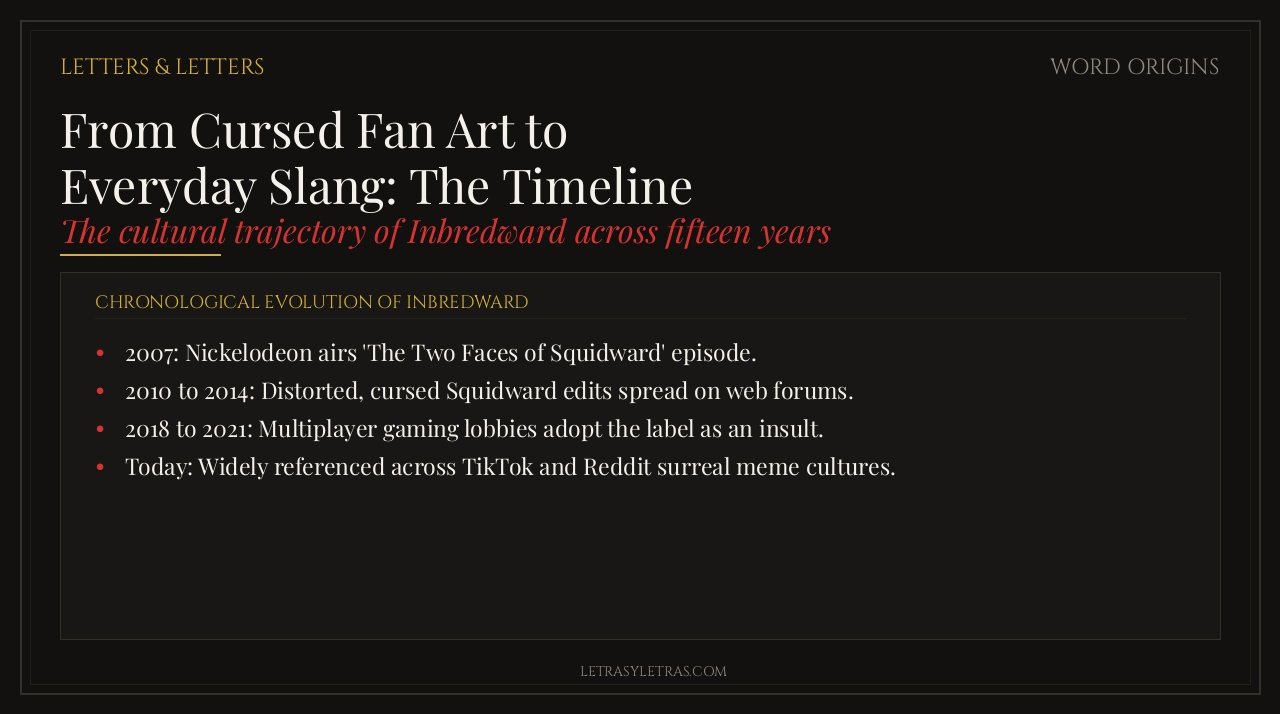
The fifteen-year evolution traces inbredward from early animation parodies to everyday social slang.
The Linguistic Lineage of Blended Words
While the word sounds modern and juvenile, its linguistic lineage is ancient. Humans have fused names and insults together for thousands of years.
Historical linguistics documents how Greek and Roman satirists invented composite words to mock political rivals. In classical Greek comedy, Aristophanes built massive compound nouns to satirize city magistrates. Roman citizens also wrote graffiti on Pompeian walls combining family names with animal traits.
Scholars at the Britannica Educational Library note how animation satire inherits this classical tradition. Cartoons externalize internal human flaws through physical exaggeration. By blending an established cartoon figure with a taboo modifier, modern youth echo ancient satirical methods.
Modern internet culture produces these blends with unprecedented speed. Common English words like smog, motel, brunch, and pixel all formed through this exact morphological process. The main difference lies in social acceptance and lifespan.
While brunch became a polite social ritual, inbredward remains sharp, vulgar, and informal. It belongs to the linguistic category of slang known as ephemeral jargon. Such words burn brightly in teenage subcultures before fading into obscurity.
Tone, Offense, and Modern Social Etiquette
Because the word circulates in cartoon memes, casual listeners might assume it is harmless fun. However, evaluating the word requires looking honestly at its root meaning.
The adjective inbred refers to consanguinity and the severe biological consequences of close familial reproduction. Throughout history, communities used the label to dehumanize isolated populations, rural families, and disadvantaged groups. It attacks a person’s genetic heritage and mental fitness.
Attaching that history to a cartoon character does not erase its sting. When directed at real human beings, the label is undeniably derogatory and hurtful. It belongs to a category of aggressive online speech designed to provoke shame.
In educational, corporate, or formal settings, using the term is entirely unacceptable. Professional etiquette demands civil language that respects human dignity. A word created for surreal online parodies has no place in respectful public discourse.
Even within digital gaming, moderation algorithms increasingly flag the term. Major gaming platforms and social networks classify the word as harassment. What began as a silly meme can result in temporary account suspensions on regulated servers.
The Evolution Timeline of Inbredward
To understand the lifespan of internet vocabulary, tracking key cultural milestones proves helpful. The following timeline outlines how this peculiar portmanteau developed across fifteen years.
| Time Period | Platform and Media | Linguistic Milestone |
|---|---|---|
| November 2007 | Nickelodeon Broadcast | The Two Faces of Squidward airs, popularizing Handsome Squidward across international audiences. |
| 2010 to 2013 | Online Message Boards | First recorded instances of inbredward appear, labeling distorted, cursed fan drawings of the character. |
| 2015 to 2018 | YouTube and Reddit | Surreal meme creators use the term to distinguish grotesque parodies from mainstream cartoon clips. |
| 2019 to 2022 | Discord and Gaming Lobbies | Semantic shift occurs. The term transitions from describing images to mocking clumsy player mistakes. |
| Present Day | TikTok and Social Video | Recognized as a niche example of Gen Z brainrot slang and internet portmanteau humor. |
Comparing Internet Slang Archetypes
The term does not exist in isolation. It belongs to a vast ecosystem of character-based internet slang created over the past two decades.
Consider the contrasting archetypes that populate digital discussions. On one end stands the Chad or Handsome Squidward persona, symbolizing effortless confidence, physical perfection, and poise. Opposite this archetype sit caricatures representing failure, confusion, and awkward struggle.
Our curated collection of English idioms and meanings explains how cultures personify their anxieties. In earlier centuries, people invented folklore characters like Jack Frost, the Sandman, or Simple Simon to illustrate human foibles.
Digital generations have replaced folkloric gnomes with cartoon personalities. When people examine our archive of famous quotes and quotations, they find writers observing how youth constantly reinvent their dialect. Slang remains a dynamic mirror of contemporary culture.
Like the ancient Greeks in our origin of the word barbarian study, human groups define themselves by what they mock. Inbredward serves as a digital cautionary tale of clumsiness, wrapped in surreal cartoon absurdity.
The Future of Ephemeral Slang
Will lexicographers add inbredward to formal dictionaries fifty years from now? History suggests otherwise.
Most internet slang experiences a brief, intense lifecycle. A phrase catches fire on streaming channels, peaks across social feeds, and then becomes dated. As younger cohorts enter the internet, they abandon their predecessors’ slang.
Yet studying these ephemeral terms holds real value for students of language. It demonstrates that the mechanisms of word formation never stop. People keep blending, shortening, and twisting syllables to fit their emotional needs.
From ancient papyrus scrolls to modern Discord chats, human communication remains alive and inventive. Recognizing the roots of modern words gives us a deeper appreciation for the human mind’s endless creativity.
Frequently Asked Questions
What is the literal origin of the word inbredward?
The word is a portmanteau created by internet meme creators around 2010. It combines the derogatory adjective inbred with the name of the cartoon character Squidward from SpongeBob SquarePants. The blend was originally used to label grotesque, distorted drawings of the character.
Is inbredward an official SpongeBob SquarePants character?
No, inbredward has never appeared in any official Nickelodeon broadcast or authorized publication. It is strictly an unofficial, fan-made parody created by online communities for surreal humor.
Why is inbredward considered offensive?
The term incorporates the word inbred, which carries a severe social and genetic stigma. When used against real people, it functions as an insult targeting a person’s intelligence, appearance, or background.
How is inbredward used in modern gaming culture?
In multiplayer gaming lobbies, players use the label as informal slang to mock foolish decisions or bad gameplay. It describes an individual making clumsy mistakes or acting without common sense.
What is the difference between Handsome Squidward and inbredward?
Handsome Squidward is an official 2007 cartoon persona depicting the character with chiseled, beautiful features. In contrast, inbredward is an unofficial, distorted meme caricature representing grotesque absurdity and clumsy foolishness.
Why do cartoon characters frequently become internet slang?
Cartoons provide instantly recognizable visual archetypes that millions of viewers understand without explanation. Pairing a familiar cartoon name with an adjective lets internet users convey complex emotions or insults in a single memorable word.
Alan Sledge is the founder and lead writer at letrasyletras.com, dedicated to uncovering the true etymological histories behind our favorite words and phrases.


Alan Sledge is the writer and founder behind Letters & Letters. A lifelong lover of words, Alan has always been drawn to the small mysteries hidden in everyday language, why we say what we say, where our favorite sayings came from and the quotes that manage to put feelings into words better than we ever could ourselves.